
Converting Decimals to Fractions
To convert a terminating decimal to a fraction, write the digits after the decimal as the numerator, use a denominator of , , or another matching power of ten, then simplify; keep any whole-number part when needed.
Decimals and fractions are two different ways to write the same value. Converting a decimal as a fraction reveals its exact parts-to-whole relationship and makes it easier to use in certain calculations.
How do you convert decimals to fractions?
To convert decimals to fractions, identify the final place value of the decimal digits, write the equivalent fraction, and simplify it to its lowest terms.
Every terminating decimal can be written as a fraction with a denominator that is a power of ten. The number of digits after the decimal point tells you how many zeros the denominator needs.
You can complete any decimal to fraction conversion by following three straightforward steps: reading the decimal place value, choosing a power-of-ten denominator, and simplifying the fraction.
Read the decimal place value
The first step is to correctly identify the decimal place value of the rightmost digit in the number.
The first position to the right of the decimal point represents tenths, the second represents hundredths, and the third represents thousandths.
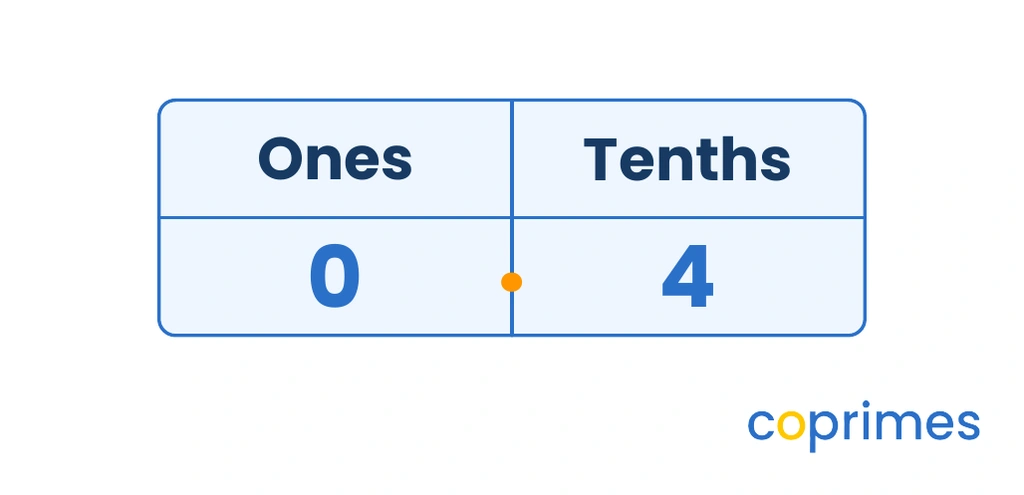
For the decimal , the last digit is , and it sits in the tenths column. Therefore, the decimal is read as four tenths.
Choose a power-of-ten denominator
Once you identify the place value, write the decimal digits as the numerator over a denominator of , , or . These are called decimal fractions.
If a decimal has two digits after the point, its final digit is in the hundredths place. The correct denominator is .
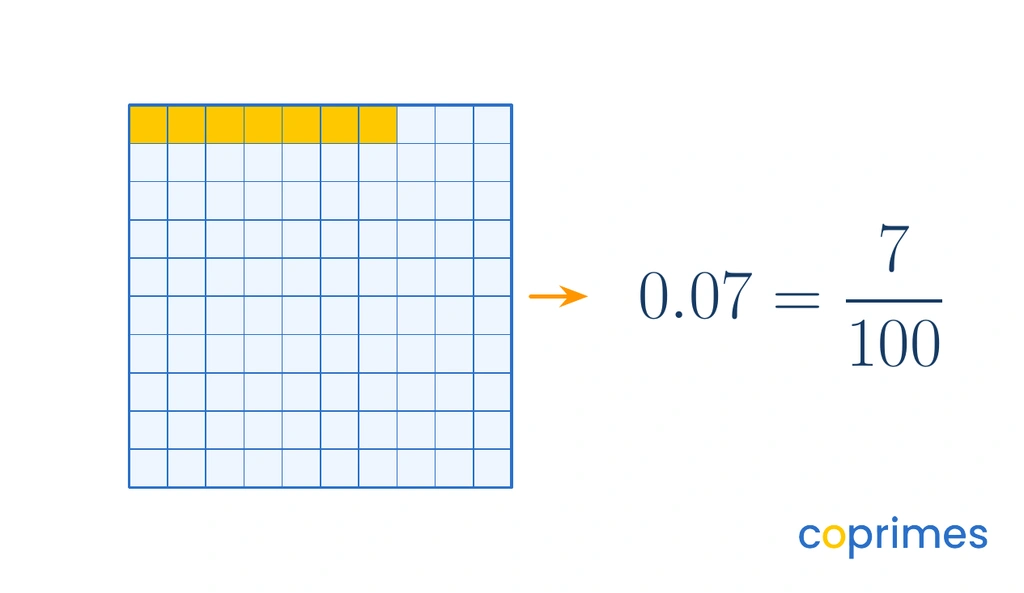
For the decimal , the final digit sits in the hundredths place. The digit becomes the numerator, and becomes the denominator, creating the fraction .
A learning plan shaped by your child, not the class
State-aligned Math plus our own Logic and English curriculum. An adaptive baseline test finds the gaps and fills them.
Simplify the fraction
The final step is simplifying fractions to their lowest terms. Divide both the numerator and the denominator by their greatest common factor.
For the decimal , you first write it as . Both and are even numbers, which means they can both be divided by .
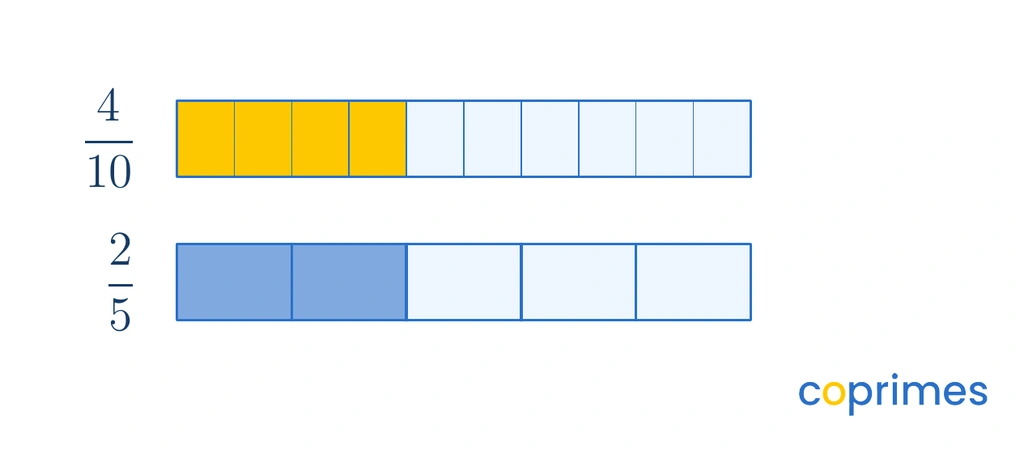
Dividing the numerator and the denominator by simplifies the fraction to .
Always check if the numerator and denominator share a common factor greater than one.
Convert decimals greater than one
When a decimal value is greater than one, keep the whole number exactly as it is and convert only the decimal part into a fraction. The result is a mixed number.
For the decimal , the whole number is . The decimal part is , which stops in the hundredths place.
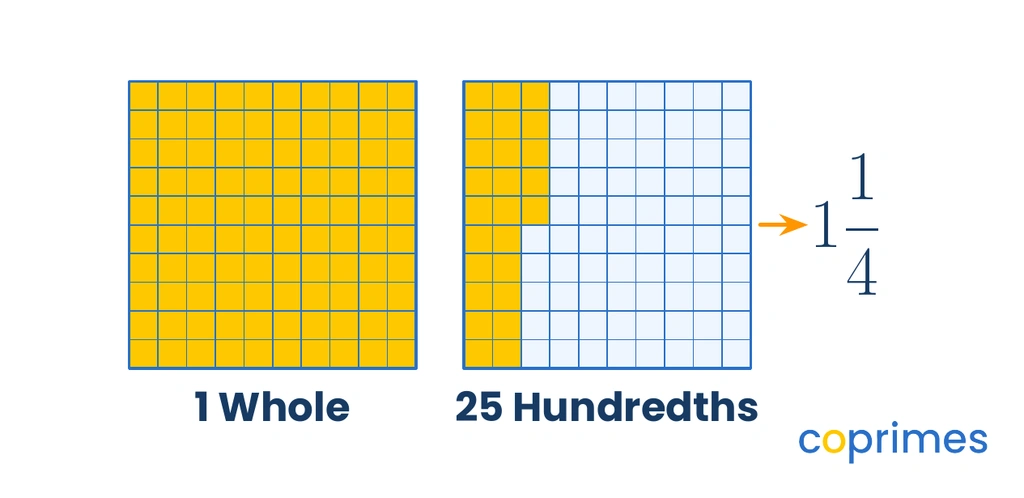
Write the number as . Since and share a greatest common factor of , simplify the fractional part by dividing both numbers by . The final mixed number is .
Worked examples
You can practice decimal fraction conversion by following the same pattern regardless of how many digits the number contains.
Example 1: Converting a single decimal place
Question: Convert to a fraction in simplest form.
Method:
- Identify the place value of the last digit. The digit is in the tenths place.
- Write the fraction as a power of ten. The fraction is .
- Simplify the fraction. Both and divide evenly by .
Answer:
Check: Since , the conversion is correct.
Example 2: Converting a decimal with zeros
Question: Convert to a mixed number in simplest form.
Method:
- Keep the whole number separate from the decimal part .
- Identify the place value of the last decimal digit. The is in the hundredths place.
- Write the fractional part. The fraction is .
- Simplify the fraction. Divide both the numerator and denominator by to get .
Answer:
Check: . Add the whole number to get .
Example 3: Converting a negative decimal
Question: Write as a fraction in simplest form.
Method:
- A negative sign does not change the conversion steps. Keep the negative sign and the whole number in front.
- The decimal part is , which stops in the tenths place.
- Write the fractional part as .
- Simplify by dividing the numerator and denominator by to get .
Answer:
Check: The fraction equals . Applying the negative whole number gives .

Common mistakes
When writing decimals as fractions, learners often make a few recognizable errors.
Miscounting the place value zeros
A common mistake is writing the denominator as simply because there is one non-zero digit, ignoring leading zeros. For example, some learners write as . Because the is in the second decimal position, it represents hundredths, and the correct fraction is .
Forgetting to simplify
Leaving the answer as is mathematically equal to , but it is not fully simplified. Always look for common factors ending in or , or check for even numbers, to divide the numerator and denominator down to their lowest terms.
Treating repeating decimals like terminating ones
The power-of-ten method only works for terminating decimals that have a clear ending. You cannot convert by placing over . Understanding repeating decimals to fractions requires an entirely different algebraic method.
Frequently asked questions
How do I convert fractions to decimals?
You reverse the process by dividing the numerator by the denominator. If a fraction already has a denominator of , , or , you can write it directly using place value. You can explore this further in fractions to decimals.
Can I always use as the denominator?
Yes, but only for terminating decimals. The number of digits after the decimal point determines the number of zeros in the denominator. One digit uses , two digits use , and three digits use .
What is the difference between terminating and recurring decimals?
A terminating decimal stops entirely, such as or . A recurring decimal has a digit or pattern that repeats infinitely, such as or .
Practice questions
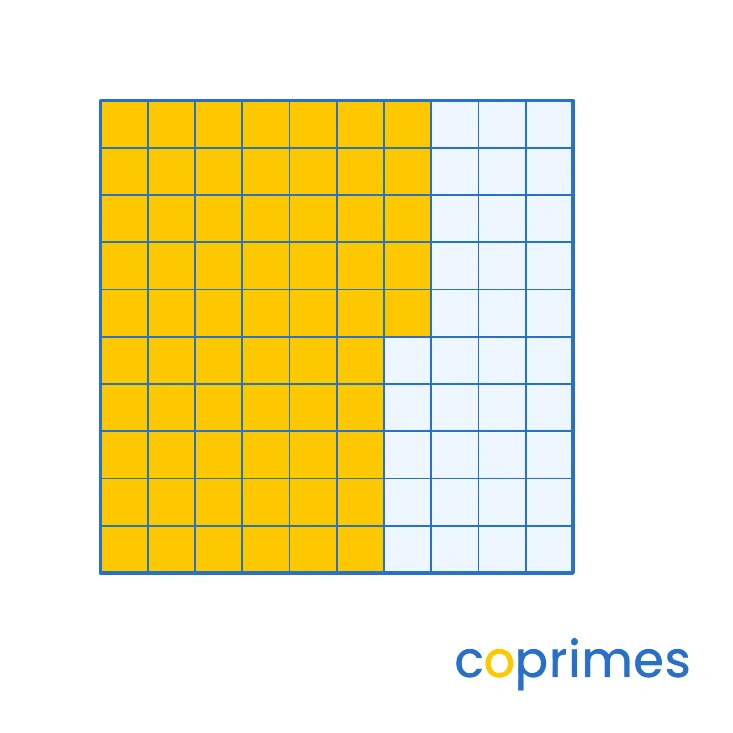
The grid represents the decimal . Which fraction represents this decimal in its simplest form?
Which fraction represents the decimal ?
Convert the decimal to a mixed number in its simplest form.
A learner converts the decimal into the fraction .
What mistake did the learner make?
They forgot to simplify the fraction to its lowest terms.
They used as the denominator instead of .
They used as the denominator instead of .
They divided the numerator by but did not divide the denominator.
They used as the denominator instead of .
What is the simplest fractional form of ?