
Number Lines: Guide and Examples
A number line represents numbers as points placed in order at equal intervals, with values increasing from left to right. It is a fundamental visual tool used to compare numbers, understand sequences, and model mathematical operations.
What Is a Number Line?
A number line is a straight, horizontal line with numbers placed at evenly spaced points along its length. It provides a geometric way to view numerical order and relative size. Grasping the underlying concept of place value helps in understanding why numbers are ordered systematically along the line.
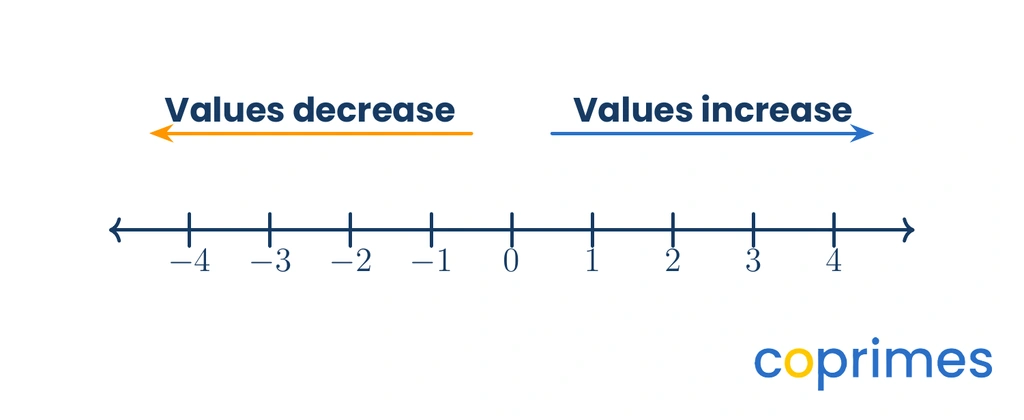
Numbers on the right are always greater than numbers on the left. The line extends infinitely in both directions, though drawn segments represent specific bounds. Understanding how to use a number line builds a strong foundation for mental mathematics and operations.
Key Ideas and Vocabulary
To read a number line accurately, several key terms describe its different parts. These concepts apply whether you are plotting basic integers or the entire real number line.
- Origin: The point representing zero. It separates positive numbers from negative numbers.
- Integers on a number line: Whole numbers placed as points, including positive integers to the right of zero and negative integers to the left.
- Interval: The distance between two consecutive marks. This distance must be strictly uniform across the entire scale.
- Fractions and Decimals: Parts of a whole plotted between consecutive integers, showing their exact relative size.
Practicing reading and writing large numbers often relies on understanding these continuous intervals. This continuous view is closely tied to standard word and expanded form, as both emphasize the exact magnitude of numbers.
Visual Explanation
Fractions on a number line and decimals on a number line are handled by dividing the space between whole numbers into smaller, equal intervals. This visual method clarifies how parts of a whole compare.
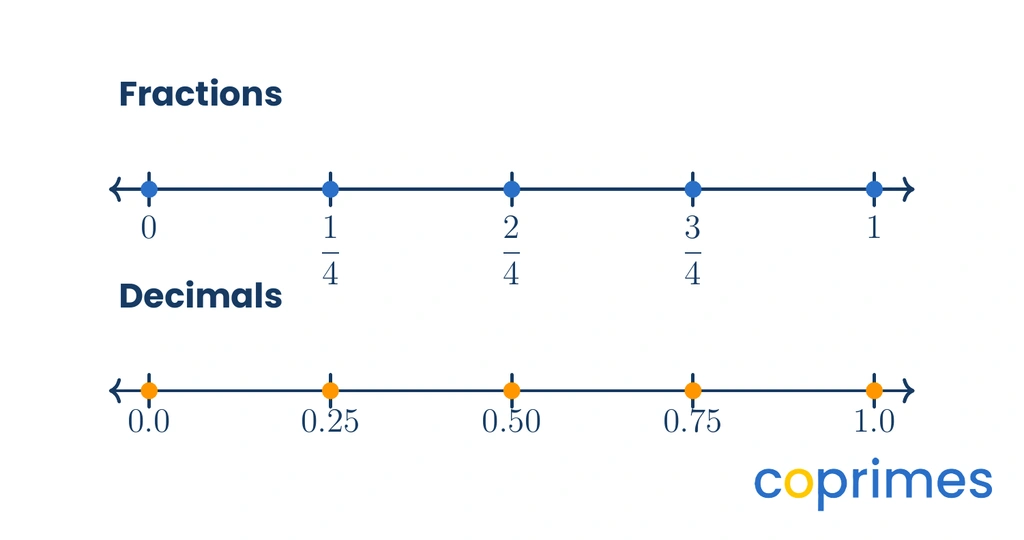
When representing halves, divide the space between zero and one into two pieces. For quarters, divide it into four equal pieces. The same rule applies to tenths and hundredths when plotting decimal values.

Worked Examples
Looking at number line examples helps clarify how continuous numbers behave.
Example 1: Comparing negative and positive integers
Question: Compare and on a number line. Which value is greater?
Method:
- Locate the origin ().
- Move units to the left to find .
- Move units to the right of to find .
- Identify which point sits further to the right.
Answer: is greater than .
Check: Any positive number is plotted to the right of any negative number. Since rightward placement means a greater value, .
Example 2: Plotting fractions
Question: Plot the fractions and on a number line from to . Which fraction is closer to ?
Method:
- Draw a number line starting at and ending at .
- Divide the segment into strictly equal intervals.
- Start at and count rightward to place at the first mark.
- Count rightward to place at the third mark.
Answer: The fraction is closer to .
Check: Calculate the distance to . , while . The smaller difference confirms is closer.
Example 3: Identifying decimal values
Question: What decimal is located exactly halfway between and ?
Method:
- Recognize that is and is .
- Find the total distance between the numbers: .
- Divide the distance in half to find the midpoint interval: .
- Add this half-distance to the starting value: .
Answer: The decimal exactly halfway between the two is .
Check: Ensure equal distance from both bounds: and .
Common Mistakes and Non-Examples
A frequent misconception is drawing a line with unevenly spaced intervals. If the gap between and is visually wider than the gap between and , the representation fails to function as a mathematical scale.
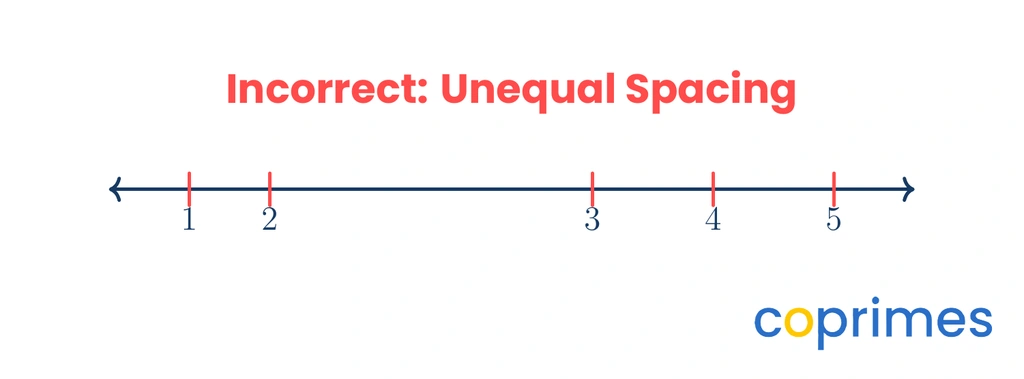
Every interval between consecutive whole numbers must have the exact same length.
Another common error involves placing negative numbers backward. Because values must increase from left to right, belongs to the left of , not between and zero.
Real-World Connections
Many everyday measurement tools function as physical number scales.
A ruler operates identically to a fractional number line, while a thermometer acts as a vertical version that successfully plots both positive and negative values. As numbers grow exceptionally large, powers of ten are often used on scientific scales to compress the visible intervals.
Timelines in history function in the same way, charting the sequence of events chronologically, occasionally using Roman numerals to denote centuries positioned in order.
A learning plan shaped by your child, not the class
State-aligned Math plus our own Logic and English curriculum. An adaptive baseline test finds the gaps and fills them.
Practice questions
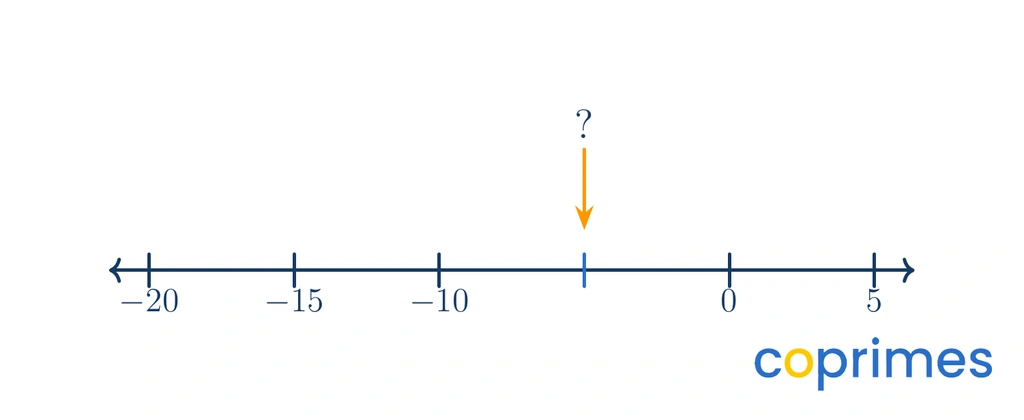
Based on the visual, what is the missing value indicated by the question mark?
Which of the following statements about a mathematically accurate number line is true?
Moving left along the line increases the value of the numbers.
Negative numbers are always placed to the right of zero.
The physical distance between consecutive whole numbers must be strictly equal.
Fractions cannot be plotted on the same line as whole numbers.
The physical distance between consecutive whole numbers must be strictly equal.
What decimal value is located exactly halfway between and ?
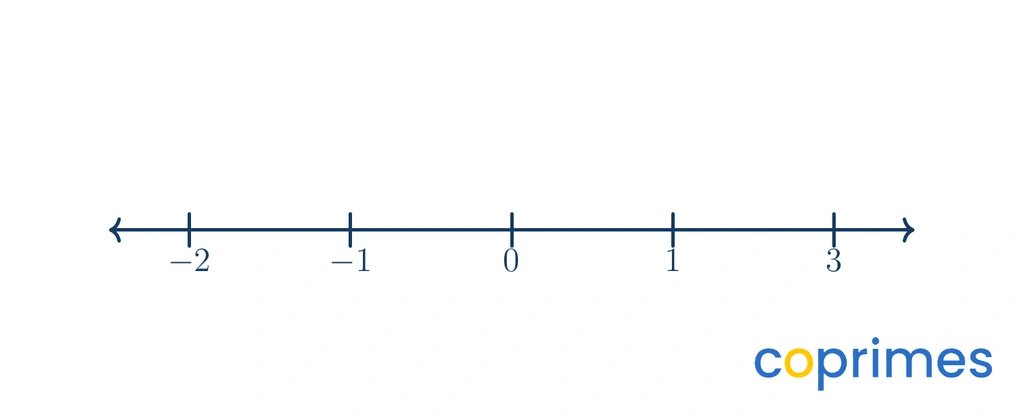
A student drew the number line shown above. What is the mathematical error in their drawing?
Negative numbers cannot be shown on a number line.
The numbers should increase from right to left instead.
The labeling skips a value, making the constant interval spacing incorrect.
Zero is placed in the wrong position relative to the negative values.
The labeling skips a value, making the constant interval spacing incorrect.
Which of the following fractions is located strictly to the left of on a standard number line?