
Prime vs Composite Numbers: Differences and Classification
When comparing prime vs composite numbers, every whole number greater than is either prime, with exactly two positive factors, or composite, with more than two positive factors.
Understanding factors allows us to classify prime composite groups accurately. A number's classification tells us whether it can be broken down into smaller whole numbers.
What Are Prime vs Composite Numbers?
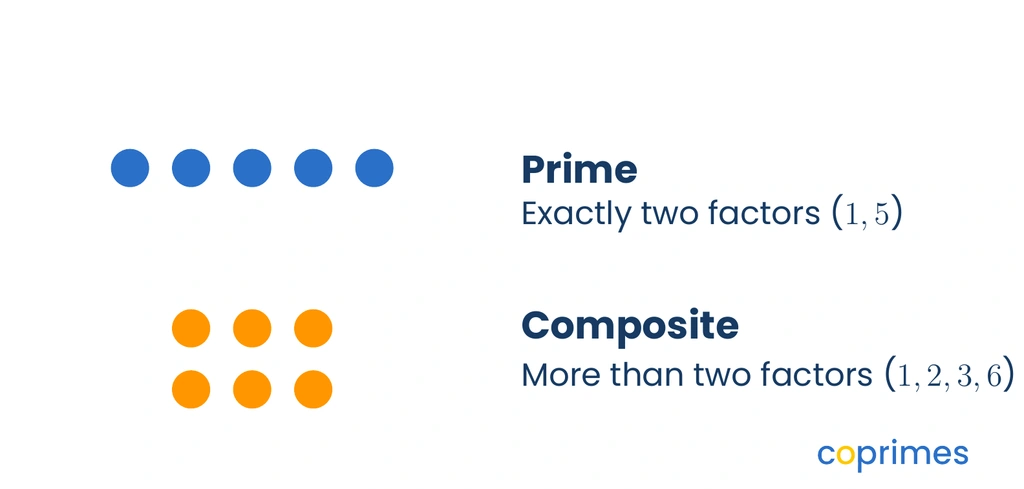
What is prime vs composite numbers? Prime numbers can only be divided evenly by and themselves, while composite numbers can be divided by other numbers as well.
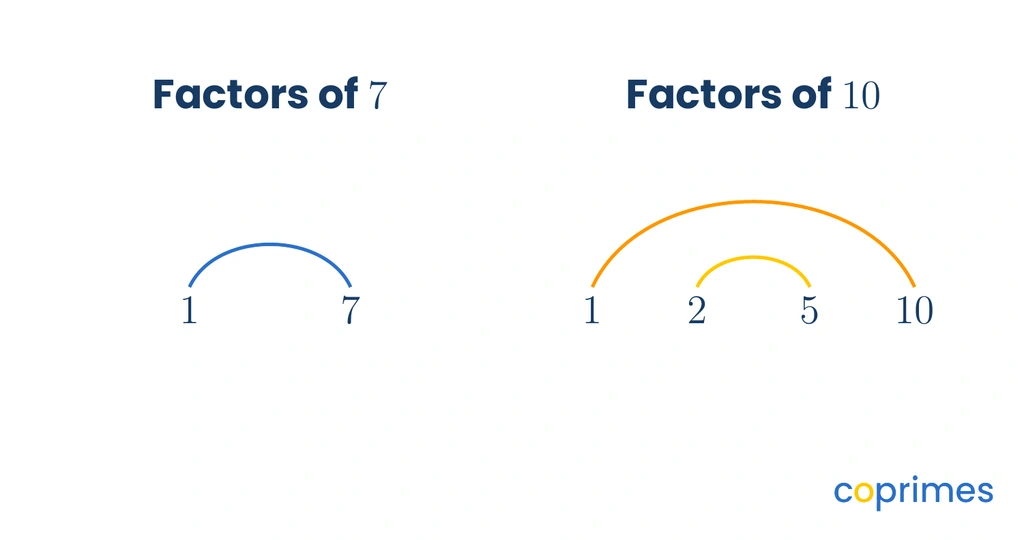
A prime number has exactly two distinct positive factors: and the number itself. For example, is a prime number because its only factors are and .
A composite number has more than two positive factors. This means it can be divided evenly by , itself, and at least one other whole number. For example, is a composite number because its factors are , and .
Key Differences
The main difference between prime and composite numbers is the total number of factors. Prime numbers have exactly two factors, composite numbers have three or more, and the number is a special case.
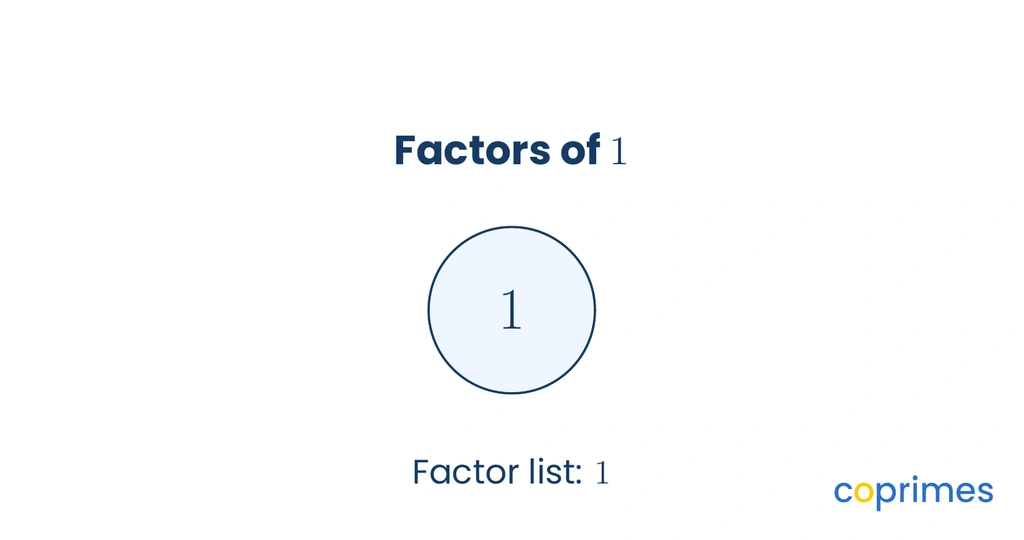
The number one is neither prime nor composite because it has exactly one positive factor.
Another difference involves even numbers. The number is the only even prime number. Every even number greater than is composite because it is divisible by .
Example 1: Classifying numbers into categories
Question: Sort the numbers , and into the correct categories: prime, composite, or neither.
Method:
- Find the factors of each number.
- The number has exactly one factor (). It is neither prime nor composite.
- The number has exactly two factors (). It is prime.
- The number has four factors (). It is composite.
Answer: is prime, is composite, and is neither.
Check: Verify the factors using division. , confirming it has more than two factors.
Comparison Table
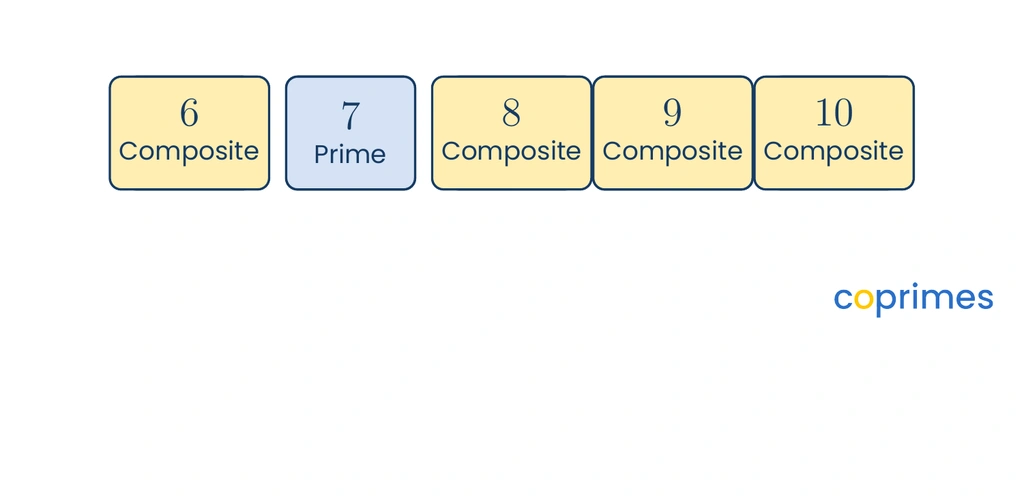
A prime composite chart or table comparing their features helps clarify the rules.
Feature | Prime Numbers | Composite Numbers |
Number of Factors | Exactly two ( and itself) | More than two |
Array Shapes | Only a single straight line () | Can form multiple rectangles |
Even Numbers | Only the number | All even numbers greater than |
Odd Numbers | Many are prime (e.g., ) | Many are composite (e.g., ) |
Number | Not prime | Not composite |

Visual Examples
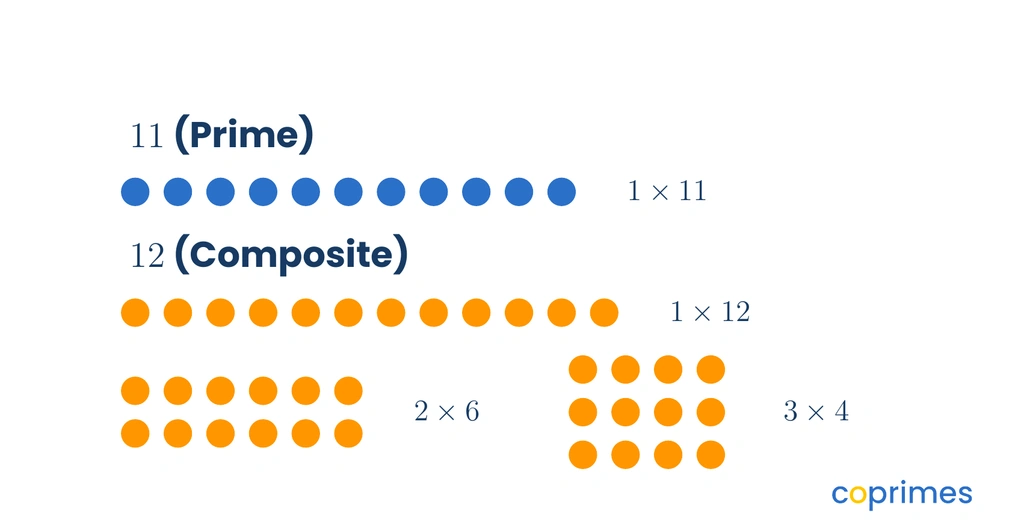
Reviewing prime vs composite numbers examples using arrays provides a visual way to see if a number can be divided into equal groups.
Because a prime number has only two factors, it can only be arranged as a single row or column. A composite number has more than two factors, so it can form multiple rectangles.
For example, items can only form one shape: a line, proving is prime. However, items can form a line, a rectangle, and a rectangle, proving is composite.
How to Choose or Classify
To choose or classify a number as prime or composite, search for its factors using divisibility checks.
If you can find even one factor other than and the number itself, the number is composite. Using divisibility rules for , and is the fastest way to check. If the number is composite, you can break it down further into a prime factorization.
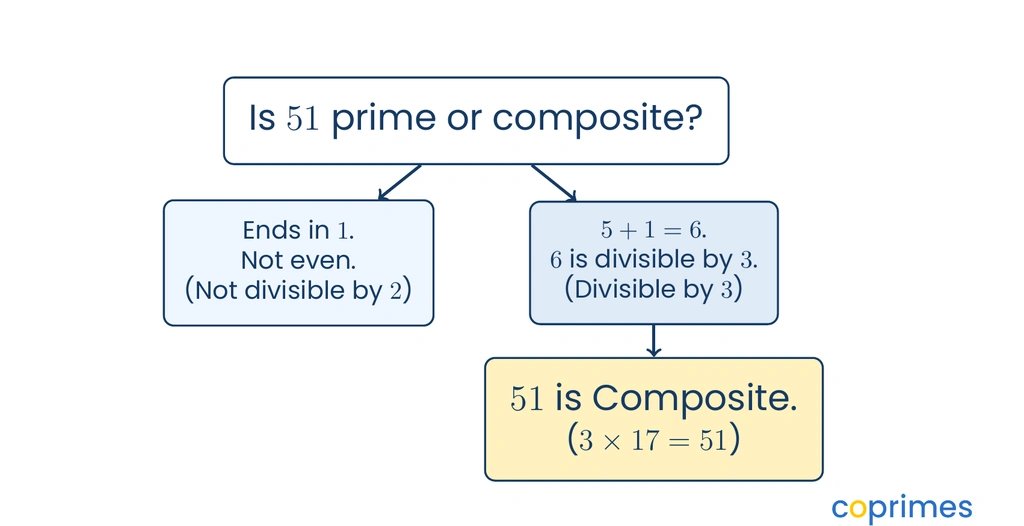
Example 2: Using factor evidence
Question: Is a prime or composite number?
Method:
- Check divisibility by small primes ().
- The number ends in , so it is not even and not divisible by .
- The sum of the digits is . Because is divisible by , the number is also divisible by .
- Perform the division: .
Answer: is a composite number because it has factors , and .
Check: Multiply .
Common Mistakes
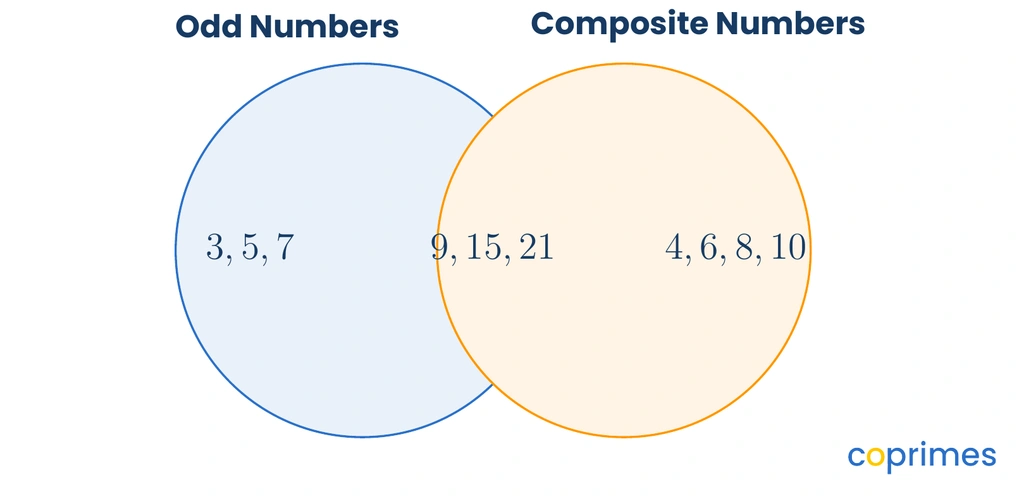
A frequent mistake is assuming that all odd numbers are prime, or that the number is a prime number.
While is the only even prime, it is false that all odd numbers are prime. Odd numbers like , and are composite because they can be divided by numbers like or . Always check for factors before assuming an odd number is prime.
Example 3: Addressing a common misconception
Question: A student claims that all odd numbers greater than are prime numbers. Provide a counterexample to prove this claim is false.
Method:
- List the first few odd numbers greater than : .
- Check the number of factors for each.
- The number is prime (factors: ).
- The number is prime (factors: ).
- The number is prime (factors: ).
- The number is divisible by (), giving it three factors: .
Answer: The number is an odd number, but it is composite, which proves the claim is false.
Check: Since has three factors, it has more than two, satisfying the definition of a composite number.
A learning plan shaped by your child, not the class
State-aligned Math plus our own Logic and English curriculum. An adaptive baseline test finds the gaps and fills them.
Practice questions

Which statement best describes the number shown by the array?
The number is prime because it has exactly two factors.
The number is composite because it can be arranged into a rectangle.
The number is prime because it is an odd number.
The number is composite because it is an even number.
The number is composite because it can be arranged into a rectangle.
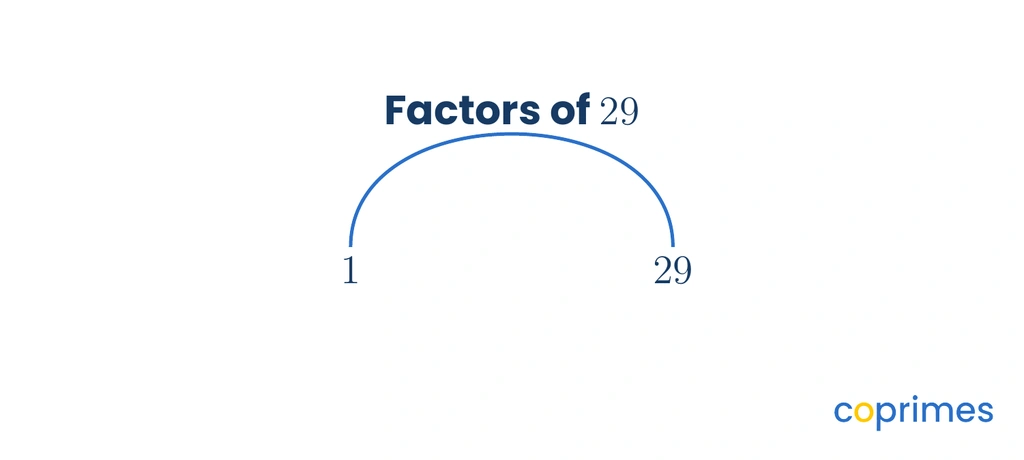
Based on its factors, how is the number classified?
Prime number
Composite number
Neither
Both
Prime number
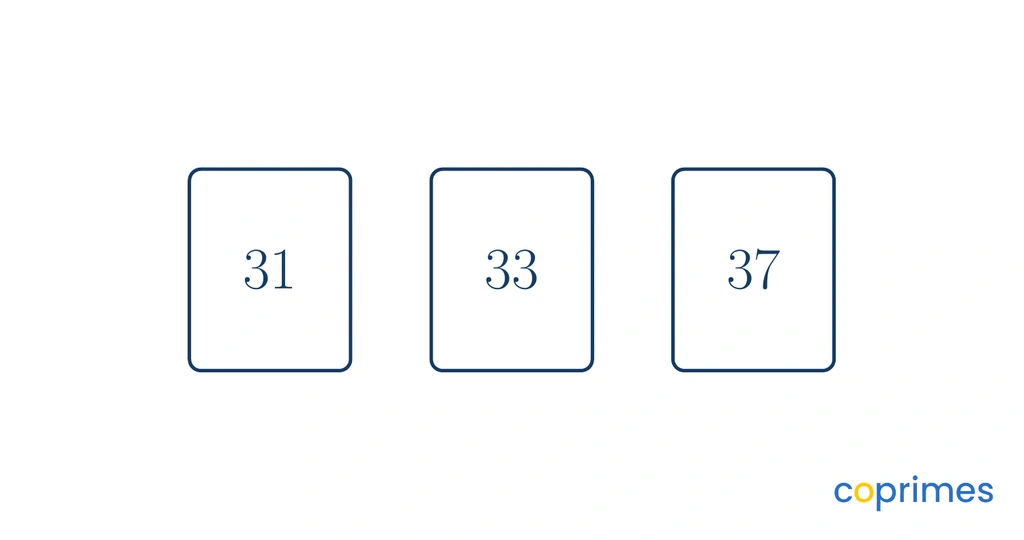
Which number in the image is a composite number?
None of them
Why is the number considered neither prime nor composite?
It is an odd number.
It is only divisible by itself, so it has exactly one factor.
It has an infinite number of factors.
It is the only even prime number.
It is only divisible by itself, so it has exactly one factor.
How many prime numbers are shown in the grid?
One
Two
Three
Four
Two