
Decimal Numbers: Meaning, Models, and Place Value
Decimal numbers use a decimal point to show a whole-number part and fractional parts such as tenths, hundredths, and thousandths. A decimal can be less than, equal to, or greater than one. They provide a precise way to represent values falling between whole numbers in the base-ten system.
What are decimal numbers?
A decimal number is a number that uses a decimal point to separate whole units from fractional parts. The word "decimal" is based on the number ten, meaning the system is built on groups of ten.
Every time we move one position to the left in a number, the value becomes ten times larger. When we move one position to the right, the value becomes ten times smaller.
This pattern continues past the ones place, creating fractions of one. We use decimal notation to write these values clearly without needing traditional fraction bars.
Parts of a decimal number
A decimal number is made of three distinct parts: a whole-number part, a decimal point, and a fractional part. The decimal point is the most critical feature because it defines exactly where the ones place is located.
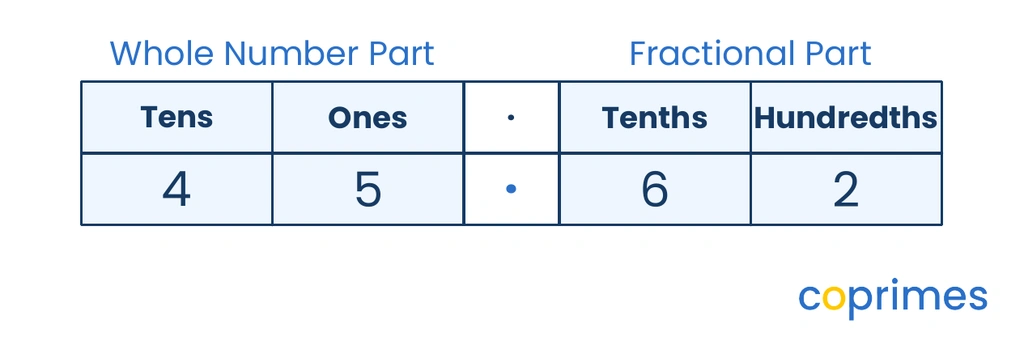
The digits to the left of the decimal point represent whole numbers. The digits to the right represent pieces that are smaller than one whole, governed by decimal place value. The first position after the decimal point is the tenths place, followed by the hundredths, and then the thousandths.
The decimal point separates the whole number from the fractional part.
Decimals as parts and quantities
Decimals are another way to write fractions that have denominators of , , or . They represent physical quantities that are not perfectly whole, such as a length of rope that is meters long.
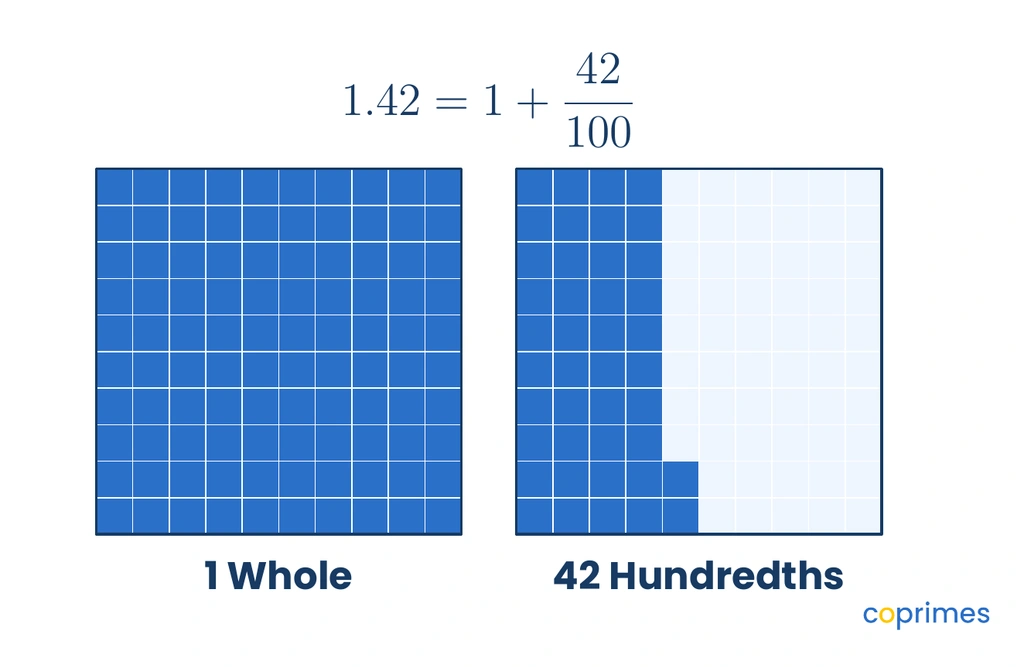
When measuring money, decimals are used constantly. A price of dollars and cents means whole dollars plus hundredths of a dollar.
Connecting fractions decimals and percentages shows that they are just different languages for describing the exact same portion of a quantity.

Use visual models
Visualizing decimals on a number line helps to show exactly how big they are compared to whole numbers. A standard number line counts by ones, but we can zoom in between any two whole numbers to see the tenths.
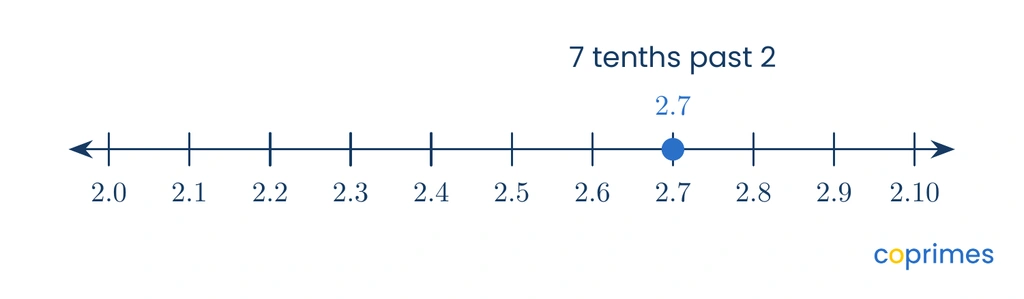
Placing decimals on a number line proves that they represent exact locations, just like whole numbers do. If we need even more precision, we can zoom in between and to find the hundredths.
Read simple decimal numbers
To read a decimal number clearly, state the whole number, say "and" for the decimal point, and then state the fractional part using its final place value. It is also common and correct to read the digits individually after stating "point".
Decimal Number | Place Value Reading | Direct Reading |
Forty-five and six tenths | Forty-five point six | |
Seventy-five hundredths | Zero point seven five | |
Thirteen and four hundredths | Thirteen point zero four |
Notice the "th" at the end of the place value words. Tens are large whole numbers, while tenths are small fractions.
Worked examples
Review these examples to see how decimal numbers are built and identified.
Example 1: Identifying place value
Question: What is the value of the digit in the number ?
Method:
- Locate the decimal point to find the ones place.
- Move right to identify the fractional places: the first is tenths, and the second is hundredths.
- The digit is in the second position after the decimal point.
Answer: The value is hundredths, or .
Check: The number expanded is tenths hundredths thousandths, confirming the position.
Example 2: Writing a decimal from words
Question: Write "five and twenty-four thousandths" as a decimal number.
Method:
- Write the whole number before the word "and". This gives .
- Place the decimal point where the word "and" appears.
- The fractional part is "twenty-four thousandths". This means the final digit, , must land in the thousandths place (three spaces right of the decimal point).
- Use a zero as a placeholder in the tenths place so the and shift into the correct positions.
Answer: The decimal number is .
Check: The places are tenths (), hundredths (), and thousandths (). The final digit is correctly in the thousandths place.
Example 3: Building from expanded form
Question: What decimal number is equal to ?
Method:
- Combine the whole numbers: .
- Place the decimal point after the ones place.
- Place the in the tenths position.
- Place the in the hundredths position.
Answer: The decimal number is .
Check: Reading yields forty-six and eighty-one hundredths, which perfectly matches the given fractions.
A learning plan shaped by your child, not the class
State-aligned Math plus our own Logic and English curriculum. An adaptive baseline test finds the gaps and fills them.
Common mistakes
A frequent mistake is assuming that any number with a decimal point must be smaller than one. While decimals are used to show fractions of a whole, a decimal number can still represent a large quantity if it has a whole-number part.
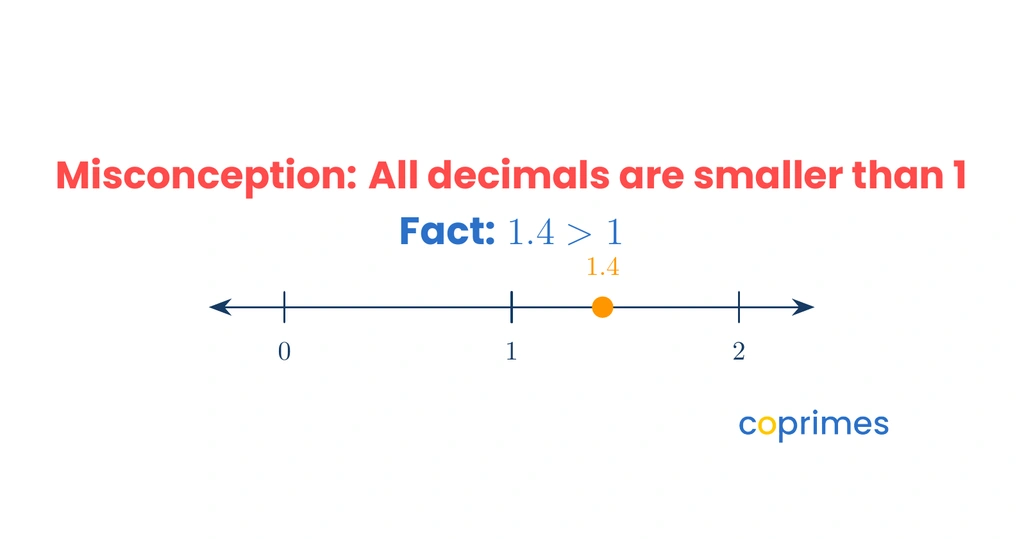
The decimal point simply acts as a marker. The number is greater than because it represents one entire whole plus an additional four tenths.
Another common error is believing that a longer decimal is always a larger number. The number has more digits than , but is greater because five tenths is larger than four tenths. Always compare decimals by looking at the largest place values first, starting from the left.
Frequently asked questions
Can a decimal number have no whole-number part?
Yes. When a quantity is strictly less than one whole, we place a zero in the ones place to make the decimal point easy to see. For example, we write instead of just .
What does the "th" mean at the end of decimal words?
The "th" ending, as seen in tenths and hundredths, indicates that the place value is a fraction of one. It distinguishes fractional pieces from the large whole numbers in the tens and hundreds places.
Is there a limit to how many decimal places a number can have?
No. The base-ten system continues infinitely to the right. Each step to the right creates a place value that is ten times smaller than the one before it, allowing for infinite precision.
Practice questions
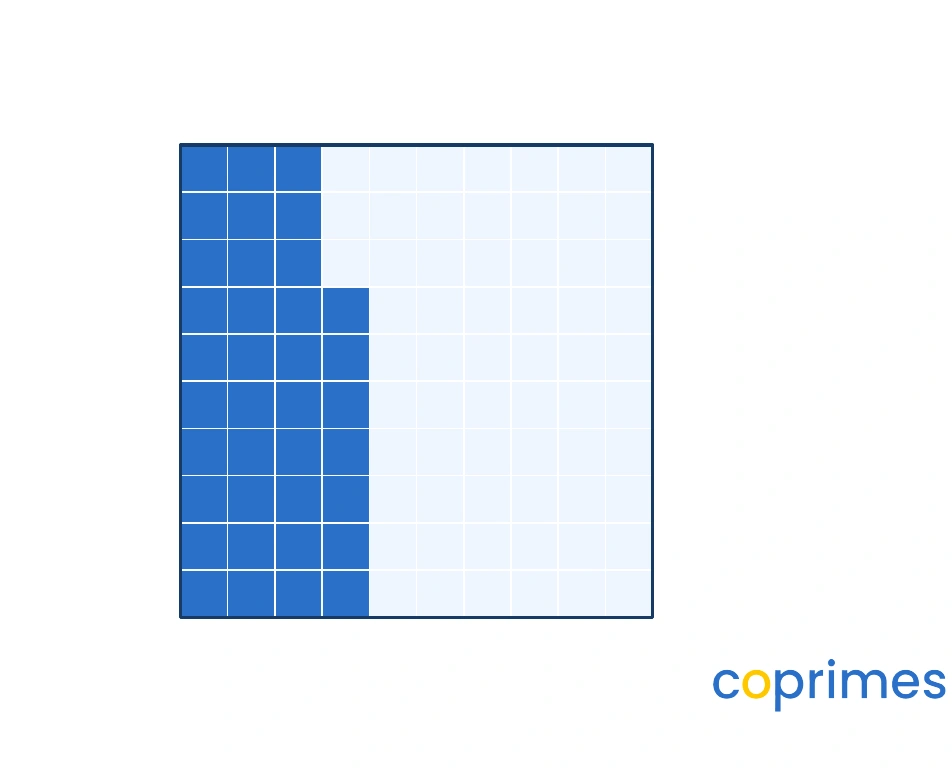
Which decimal number does this shaded grid represent if the entire grid equals ?
What is the true value of the digit in the decimal number ?
It represents ones because it is a whole number digit.
It represents tenths because it is after the decimal.
It represents hundredths because it is two places right of the decimal.
It represents thousandths because it is near the end.
It represents hundredths because it is two places right of the decimal.
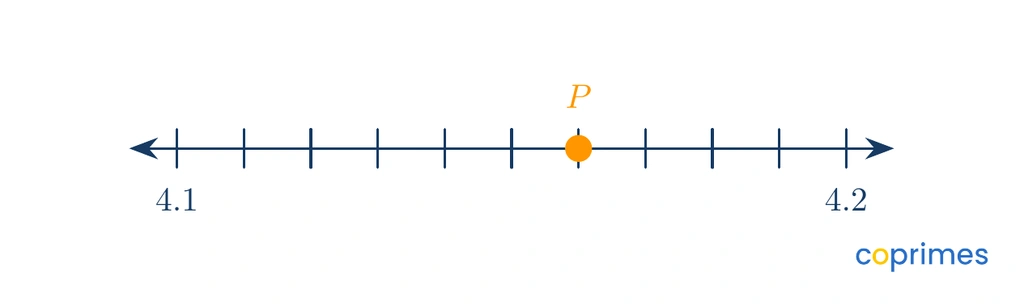
What decimal value does point represent on this number line?
How is "twenty-three and four hundredths" written as a decimal number?
Which of the following decimal numbers has the greatest value?