
Inverse Relationship Between Addition and Subtraction
Addition and subtraction are inverse operations because each can undo the effect of the other. Build fact-family triangles and bar models, solve missing addends and subtrahends, and verify each result with the inverse operation.
How are addition and subtraction related?
When you add a number and then subtract the same amount, you return to your starting value. Because they reverse each other, they share an inverse relationship.
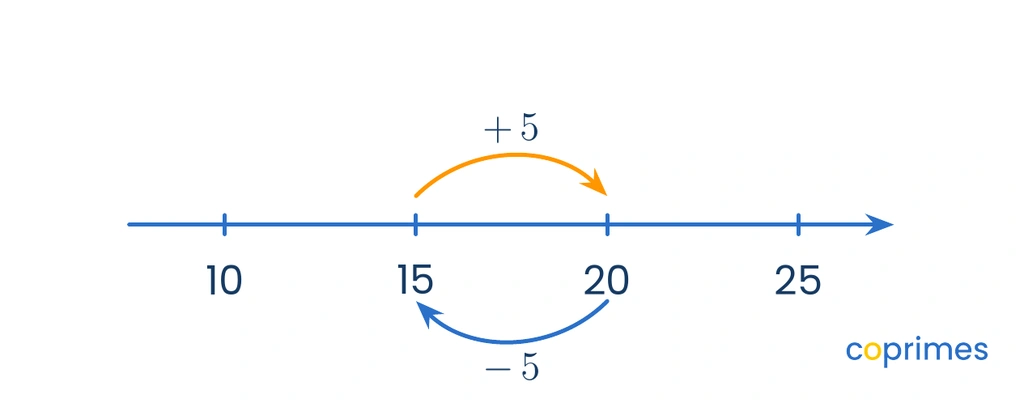
Understanding addition and subtraction as related actions makes solving missing-number problems much easier.
Inverse operations
An operation is a mathematical action. Inverse operations are actions that reverse one another. When solving equations, inverse operations allow you to work backward from an answer to find a starting number.
Addition and subtraction are inverse operations.
For example, if you start with , add , and then subtract , you return to . This concept connects directly to opposites and additive inverses, where adding a number and its exact opposite results in zero.
Fact families
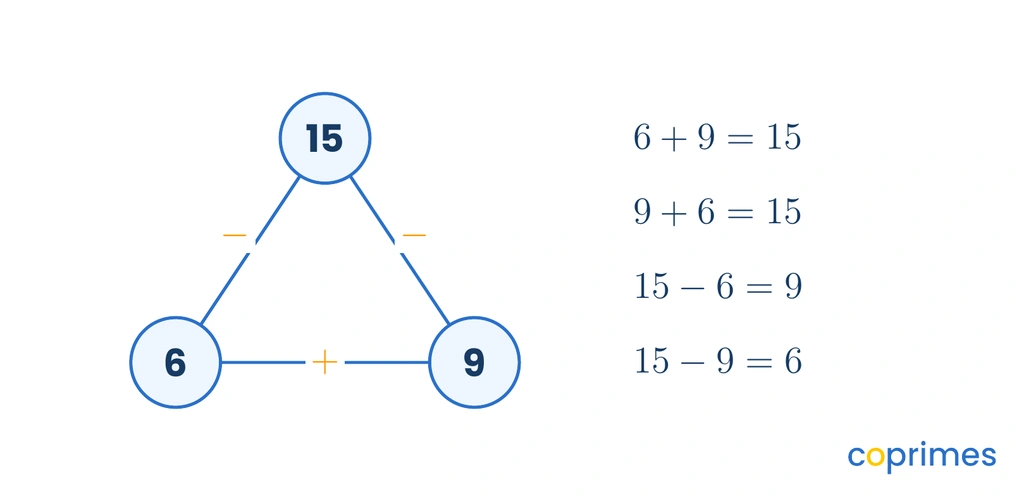
A fact family is a group of related mathematical facts that use the exact same numbers. An addition and subtraction fact family always consists of three numbers and four equations: two addition facts and two subtraction facts.
For the numbers , , and , the related facts are:
A learning plan shaped by your child, not the class
State-aligned Math plus our own Logic and English curriculum. An adaptive baseline test finds the gaps and fills them.
Bar models and missing parts
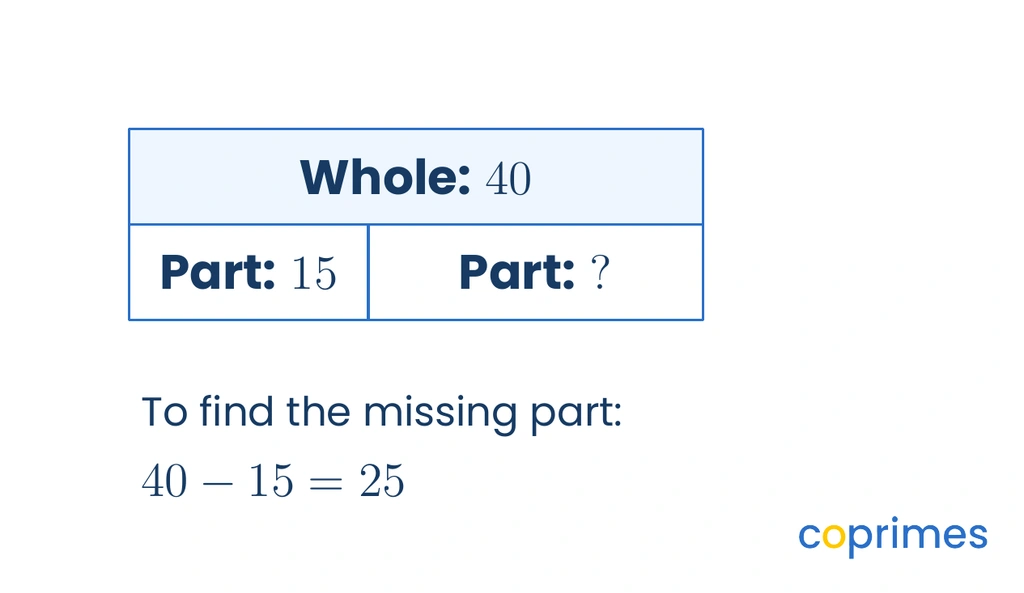
Bar models are visual tools that show the relationship between a whole and its parts. A single bar represents the total whole, and it is divided into smaller blocks representing the parts.
- To find the whole, add all the parts together.
- To find a missing part, subtract the known part from the whole.
Solving missing-number equations
You can use inverse operations to solve equations with unknown values. This is a reliable method for missing number problems where a variable represents the unknown amount.
Method:
- Identify the operation applied to the variable.
- Apply the inverse operation to both sides of the equation.
- Calculate the result to isolate the variable.
For example, to solve , identify that is being added to . The inverse operation is subtraction. Subtract from both sides to find that .
Checking calculations
Because addition and subtraction reverse one another, you can use one to check the other. This ensures your final answers are accurate. For more strategies, see checking addition and subtraction.
- If you complete an addition calculation, check it by subtracting one of the addends from the sum. The result should be the other addend.
- If you complete a subtraction calculation, check it by adding the difference to the subtrahend. The result should equal the original total.

Worked examples
Example 1: Finding a missing addend
Question: Solve for in the equation .
Method:
- Identify the operation: is added to .
- Apply the inverse operation: Subtract from both sides.
- Calculate the result to find the missing value.
Answer: .
Check: .
Example 2: Finding a missing subtrahend
Question: A bar model has a total whole of . One part is and the other part is . What is the value of ?
Method:
- Write the relationship: .
- Identify the operation needed: To find a missing part, subtract the known part from the whole.
- Apply the subtraction: calculate .
Answer: .
Check: .
Example 3: Two-step inverse operations
Question: Solve for in the equation .
Method:
- Reverse the final operation first: Add to both sides to get .
- Identify the remaining operation: is multiplied by .
- Reverse the multiplication: Divide both sides by .
Answer: .
Check: , and .
Frequently asked questions
What is an inverse operation?
An inverse operation is a mathematical action that reverses another action. Addition and subtraction are inverse operations because they reliably undo each other.
Why are fact families useful?
Fact families demonstrate the constant relationship between addition and subtraction. Knowing one fact instantly provides three related facts, which helps build mental arithmetic speed and confidence.
Does subtracting a negative number involve inverse operations?
Yes. Subtracting a negative number is mathematically equivalent to adding its positive value. For example, is the same as . The operations remain inverses even when the values involved are negative.
Practice questions
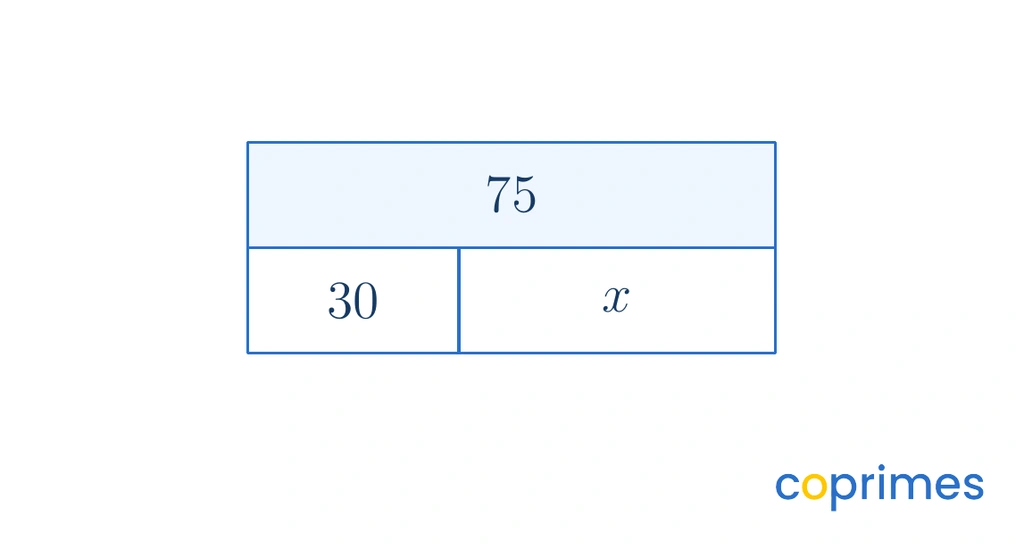
Which expression uses the inverse operation to find the value of ?
Solve for in the equation .
Which equation correctly uses an inverse operation to check the result of ?
A student attempts to solve the equation by calculating . What mistake did the student make?
They applied the same operation instead of the inverse operation.
They subtracted instead of dividing the numbers.
They used the inverse operation but added incorrectly.
They should have subtracted the whole from the part.
They applied the same operation instead of the inverse operation.
Solve for in the equation .