
Subtraction: Definition, Method and Examples
Subtraction is the operation of taking away, comparing quantities, or finding how much one number differs from another. It is the mathematical process of removing a specific amount from a starting total. Subtraction undoes the process of joining things together, making it the opposite or inverse of addition.
What is subtraction?
When you subtract, you find the exact difference between two numbers. It helps answer everyday questions such as "How many are left?" or "How much more is needed?" The subtraction operation is shown by the minus sign ().
Parts of a subtraction equation
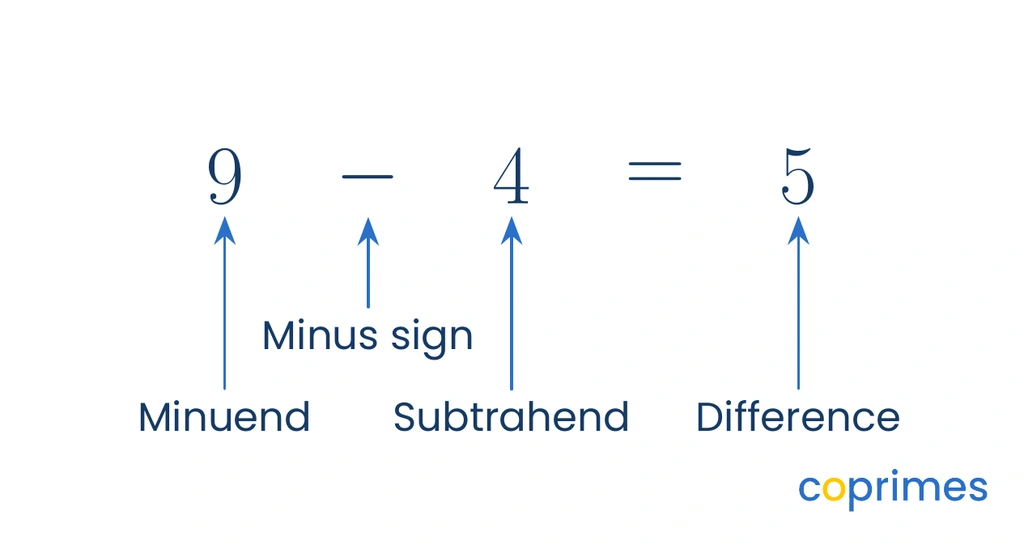
Every subtraction sentence has three main parts. Understanding the minuend, subtrahend and difference helps us describe the operation accurately.
- Minuend: The starting number or the total amount you begin with.
- Subtrahend: The number being taken away or subtracted from the minuend.
- Difference: The final answer or the result of the subtraction.
Meanings of subtraction
Subtraction can represent different real-world situations, depending on what the numbers describe.
- Taking away: Removing items from a group to see what is left over.
- Comparing: Looking at two different groups to find out how many more or how many fewer items one group has compared to the other.
- Finding the missing part: Knowing the total and one part, and subtracting to find the other unknown part.

Ways to represent subtraction
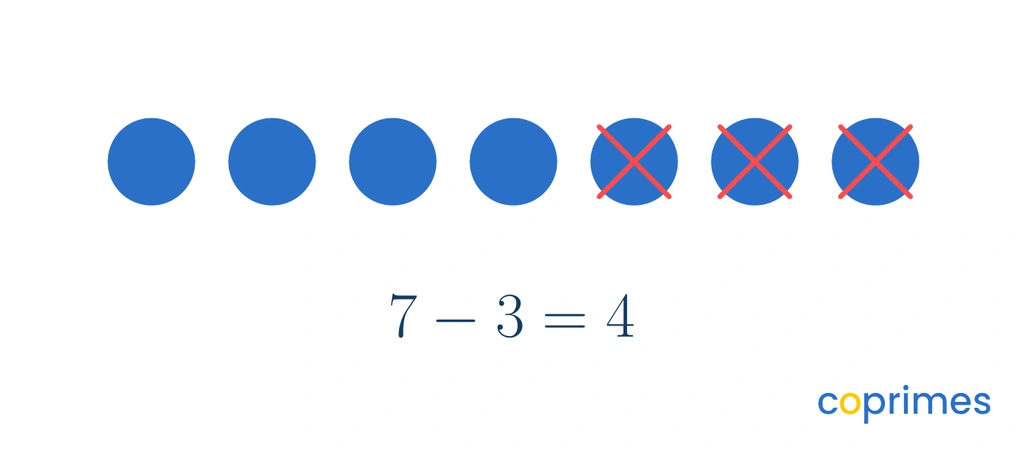
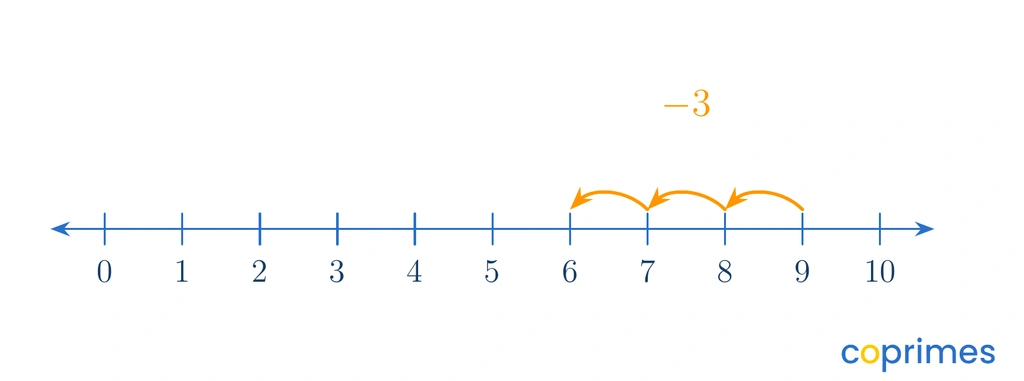
You can visualize subtraction in several helpful ways, such as drawing objects, using base-ten blocks, or moving along a number line.
A common method is using a number line. To subtract, you start at the minuend on the number line and jump backwards by the value of the subtrahend. The number you land on is the difference.
How to subtract numbers
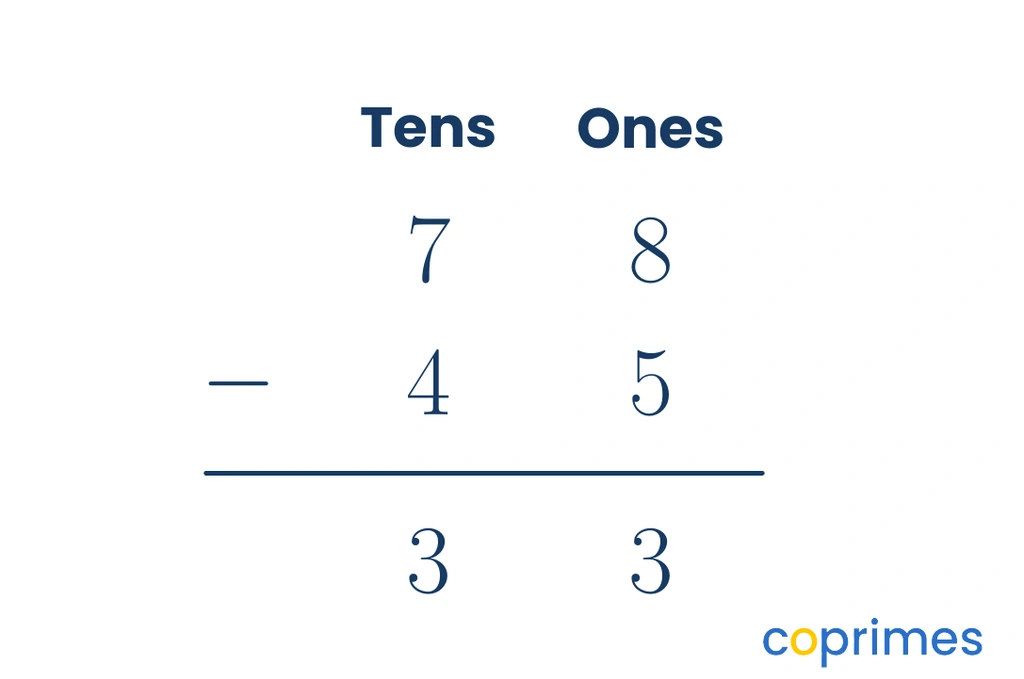
When working with larger numbers, it is best to use column subtraction. This method precisely aligns digits by their place value.
- Write the minuend on top and the subtrahend underneath, ensuring the ones digits line up vertically on the right.
- Write a minus sign () on the left and draw a horizontal line under the bottom number.
- Subtract the digits in the ones column first.
- Move to the left and subtract the digits in the tens column, followed by the hundreds, and so on.
For more complex problems where a top digit is smaller than a bottom digit, you will need subtraction with regrouping.
Worked examples
Practicing operations, analyzing place values, and solving subtraction word problems are great ways to see how subtraction applies to daily life.
Example 1: Subtracting single digits
Question: Find the difference: .
Method:
- Identify the minuend () and the subtrahend ().
- Count backwards steps from , or use known number facts.
Answer: .
Check: Add the difference back to the subtrahend: .
Example 2: Column subtraction
Question: Subtract from .
Method:
- Write on top and underneath, aligning the ones and tens correctly.
- Subtract the ones column: .
- Subtract the tens column: .
Answer: .
Check: Add in columns to confirm it totals .
Example 3: Missing parts
Question: A farmer has apples. He sells apples. How many apples are left?
Method:
- Set up the subtraction equation: .
- Align the digits in columns.
- Subtract the ones: .
- Subtract the tens: .
Answer: apples.
Check: Ensure that apples sold plus apples kept equals the starting total of .
A learning plan shaped by your child, not the class
State-aligned Math plus our own Logic and English curriculum. An adaptive baseline test finds the gaps and fills them.
Common mistakes
A frequent error is failing to align the numbers properly by their place value. Always align the ones place on the far right before beginning to subtract. If you align a ones digit underneath a tens digit, the answer will be entirely incorrect.
Another very common mistake in column subtraction is subtracting the top digit from the bottom digit when the top digit is smaller. In subtraction, the order of numbers is strictly fixed. The commutative property does not apply, meaning is not the same as . You cannot swap the minuend and the subtrahend to make the math easier.
Frequently asked questions
Does the order of numbers matter in subtraction?
Yes, the order matters completely. You must always start with the minuend (the total) and take away the subtrahend. If you reverse the order, you will not get the correct difference.
What happens when you subtract a number from itself?
When you subtract any number from itself, the difference is always zero. For example, .
What happens when you subtract zero?
When you subtract zero from any number, you are taking nothing away, so the number remains exactly the same. For example, .
Practice questions
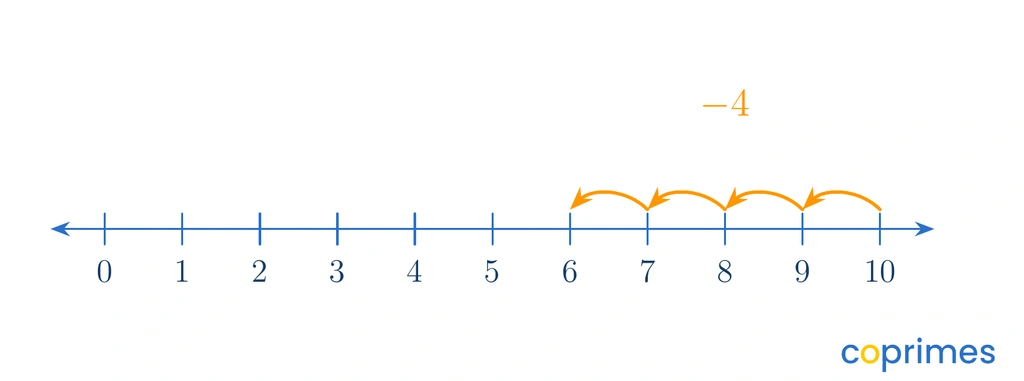
Which subtraction equation matches the visual model shown above?
In the subtraction equation , which number is the subtrahend?
A bookshelf can hold books in total. There are already books on it. Which equation shows how to find the number of books needed to fill the shelf?
What is the difference when you subtract from ?
What is the result if you subtract zero from the number ?