
Decimals in Expanded Form
Expanded form writes a decimal as the sum of each digit's place value, for example, is , making the value of every digit clear.
Writing decimals in expanded form allows learners to see exactly what each digit represents within a number. By decomposing a number into its individual parts, it becomes much easier to understand its true size and compare it with other values.
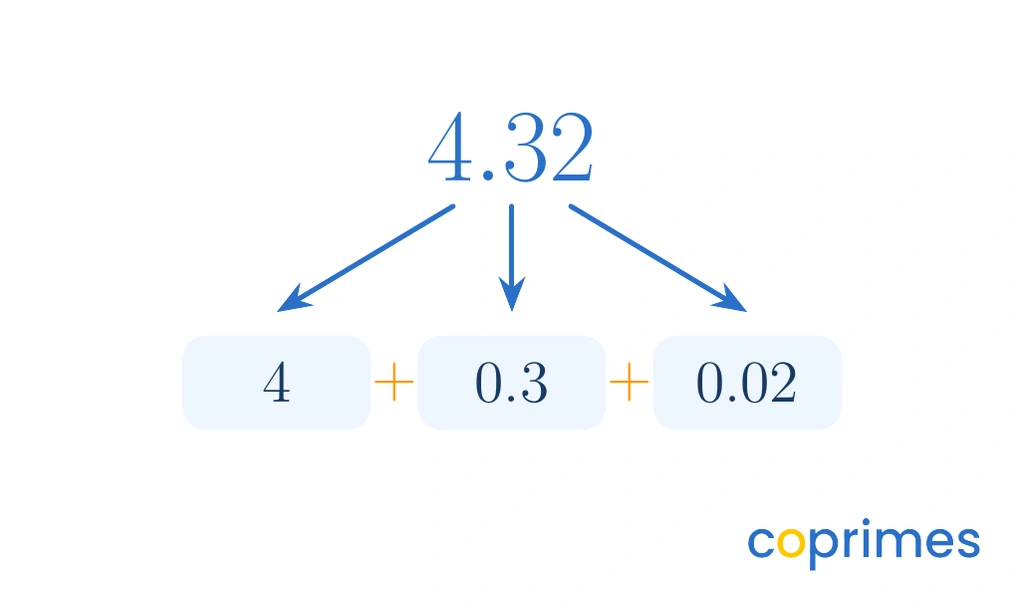
What is expanded form for decimals?
Expanded decimal notation stretches a number out to show the mathematical value of every single digit, including digits to the right of the decimal point.
Every position in a number has a specific value. When a number contains a decimal point, the digits to the left represent whole numbers, while the digits to the right represent parts of a whole. Writing a number in expanded form means adding the separate values of all these digits together.
Understanding decimal place value is essential before writing a number in this format. The expanded sum directly mirrors the name of each place value position.
Break a decimal into place values
To write a decimal in expanded form, read the number from left to right and identify the place value of each digit.
A place value chart organizes these values. Moving to the right of the decimal point, the first position is the tenths place, the second is the hundredths place, and the third is the thousandths place. Each step to the right is ten times smaller than the position before it.
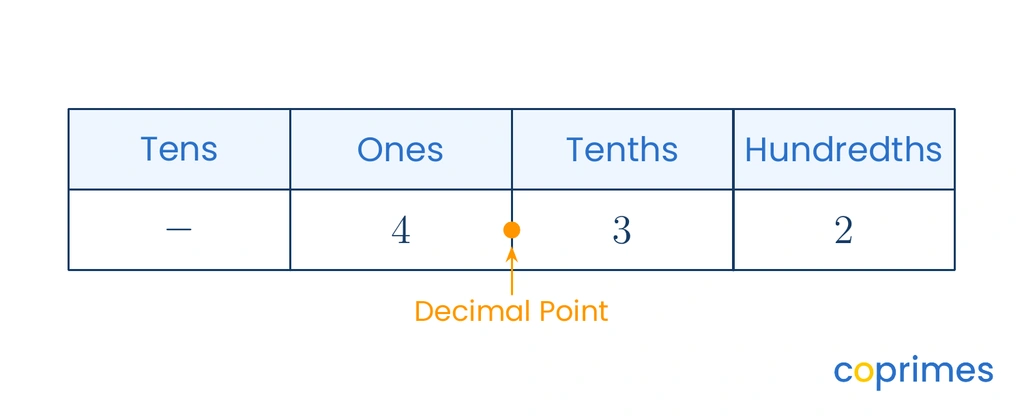
Using the chart, the number breaks down into ones, tenths, and hundredths. This decimal decomposition makes writing the expanded addition statement straightforward.
Write expanded form with fractions and decimals
Decimal expanded form can be written using either decimal numbers or fractions. Both representations are mathematically correct and hold the same value.
When using decimal notation, the digit is multiplied by its decimal place value. For example, tenths is written as , and hundredths is written as . The complete decimal expanded form is .
When using fractions, the digit is multiplied by its fractional place value. The tenths place is represented by , and the hundredths place is represented by .
The fractional expanded form of a decimal uses addition and multiplication.
The number in fractional expanded form is:
This can also be simplified slightly by performing the multiplication inside the parentheses, resulting in .

Rebuild standard form
Standard form is the normal way of writing numbers using digits. To convert an expanded form expression back to standard form, align the place values and add the parts together.
When reading and writing decimals, ensure that each digit returns to its correct place value column. If you are given , the belongs in the ones place, the in the tenths place, and the in the hundredths place. The standard form is .
Use zeros correctly
When writing expanded form with decimals, a zero digit means there is no value to add for that specific position.
Consider the number . In a place value chart, the zero is visibly placed in the tenths column to hold the position. Without this zero, the would shift into the tenths column, changing the number entirely.
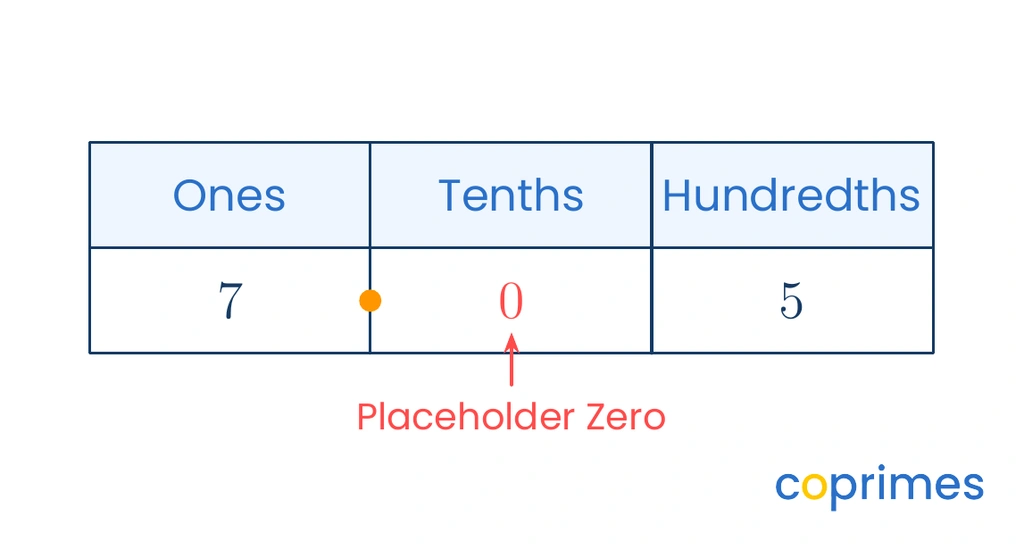
However, when writing the final expanded addition statement, zero place values are usually omitted because adding zero does not change the total sum. The number is written in expanded form as .
Worked examples
Breaking numbers apart and rebuilding them are valuable skills for comparing decimals.
Example 1: Expanding a decimal
Question: Write in expanded form using decimals.
Method:
- Identify the value of the whole number part: the is in the ones place, which is .
- Identify the value of the first decimal digit: the is in the tenths place, which is .
- Identify the value of the second decimal digit: the is in the hundredths place, which is .
- Connect all the non-zero values with addition signs.
Answer:
Check: Add the values vertically. .
Example 2: Handling interior zeros
Question: Write in expanded form using fractions.
Method:
- The whole number remains .
- The tenths place contains a , meaning there are zero tenths. This part is omitted from the expanded statement.
- The is in the hundredths place. As a fraction, this is .
- Add the values together.
Answer:
Check: Read the fraction aloud as "seven and five hundredths," which correctly matches .
Example 3: Expanding a decimal less than one
Question: Write in expanded form using decimals.
Method:
- The ones place is . Omit it.
- The tenths place is , written as .
- The hundredths place is . Omit it.
- The thousandths place is , written as .
- Sum the remaining components.
Answer:
Check: . The values match perfectly.
A learning plan shaped by your child, not the class
State-aligned Math plus our own Logic and English curriculum. An adaptive baseline test finds the gaps and fills them.
Common mistakes
A frequent error is placing a digit in the wrong column when rebuilding standard form from expanded form. If asked to evaluate , learners sometimes write instead of . The clearly indicates the belongs in the second position after the decimal point.
Another common mistake is confusing tenths and tens. Remember that numbers to the right of the decimal point end in "-ths". The tenths position () is immediately after the decimal point, whereas the tens position () is to the left of the ones place.
Frequently asked questions
Why do we need expanded form?
Expanded form proves that the position of a digit determines its value. It makes it easy to understand the composition of a number, which helps when adding, subtracting, or comparing decimals.
What is the difference between expanded form and expanded notation?
Both terms describe separating a number into its place value parts. Expanded notation usually emphasizes showing the multiplication for each place value, such as . Expanded form is often written more simply as , though both representations are widely accepted.
Practice questions
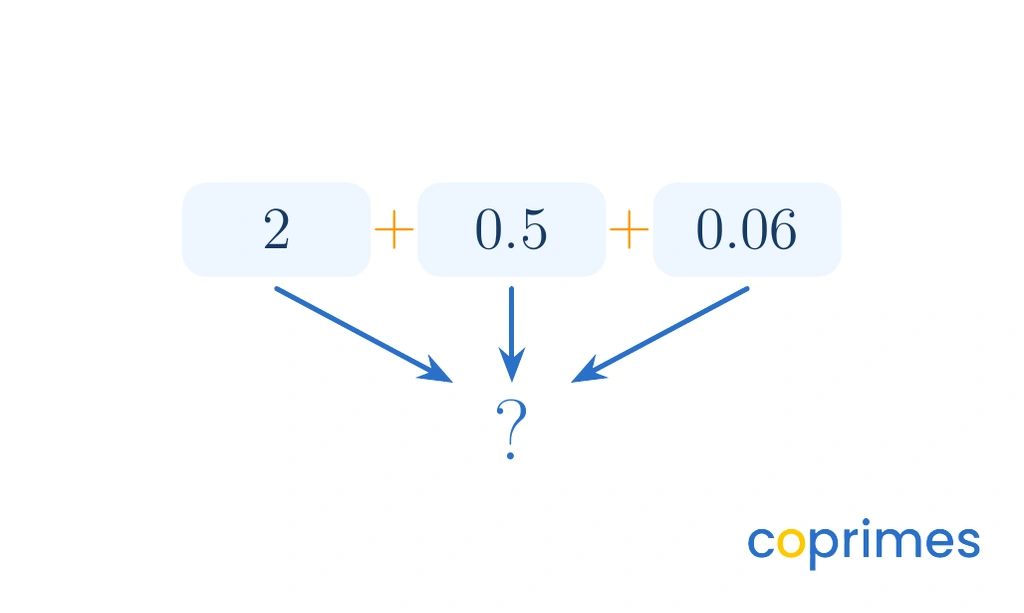
Which number in standard form corresponds to the expanded form shown in the visual model?
How is written in decimal expanded form?
What is the standard form of ?
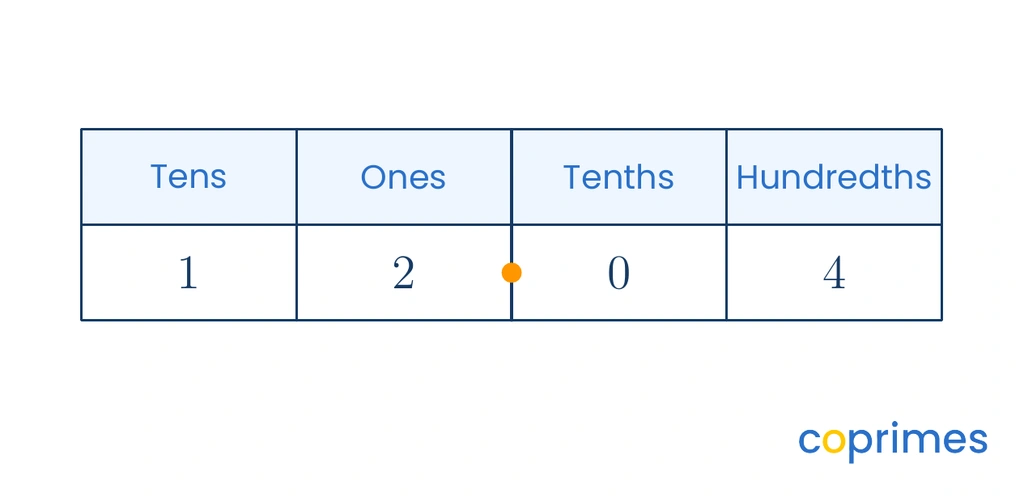
Based on the place value chart, which expression represents the number in expanded form?
A student wrote . What is the value of this expression in standard form?