
Exchange Rates: Calculating Currency Conversions
An exchange rate tells how much of one currency equals a stated amount of another. Write the direction of the rate, use multiplication when converting from the one-unit side to the other side and division for the reverse conversion, then check the result has the requested currency unit.
What is an exchange rate?
An exchange rate is the value at which the money of one country or financial system can be exchanged for the money of another. It serves as a unit rate because it defines the exact value of one currency in terms of another currency.
When countries trade or people travel, they must use the local money system. The exchange rate establishes a balanced equivalent so that the overall value remains the same, even though the number representing that value changes.
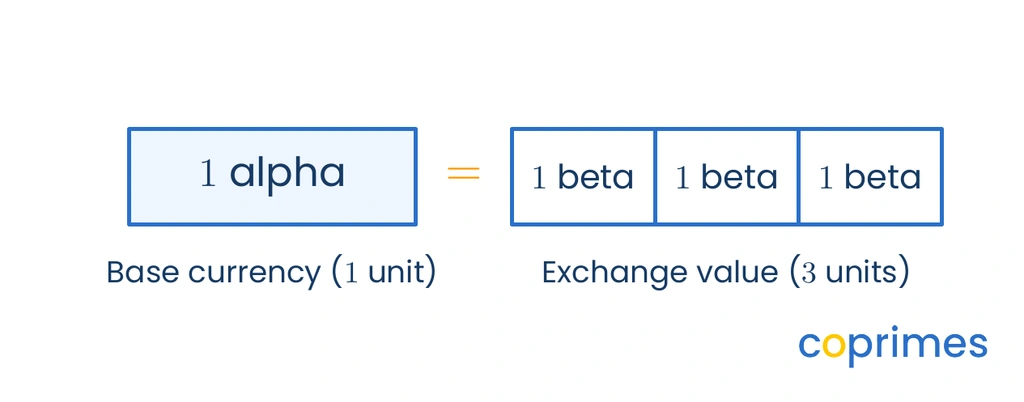
Read the direction of a currency conversion
A currency conversion always involves a starting currency and a target currency. The given exchange rate usually sets one of these currencies as the base currency.
The base currency is the side represented by exactly one unit. For example, if an exchange rate is given as , the euro is the base currency. Identifying the base currency immediately tells you which mathematical operation to perform next.
Multiply or divide by the rate
When converting amounts, the position of the base currency dictates whether you multiply or divide.
Multiply when converting from the 1-unit side, and divide when converting to the 1-unit side.
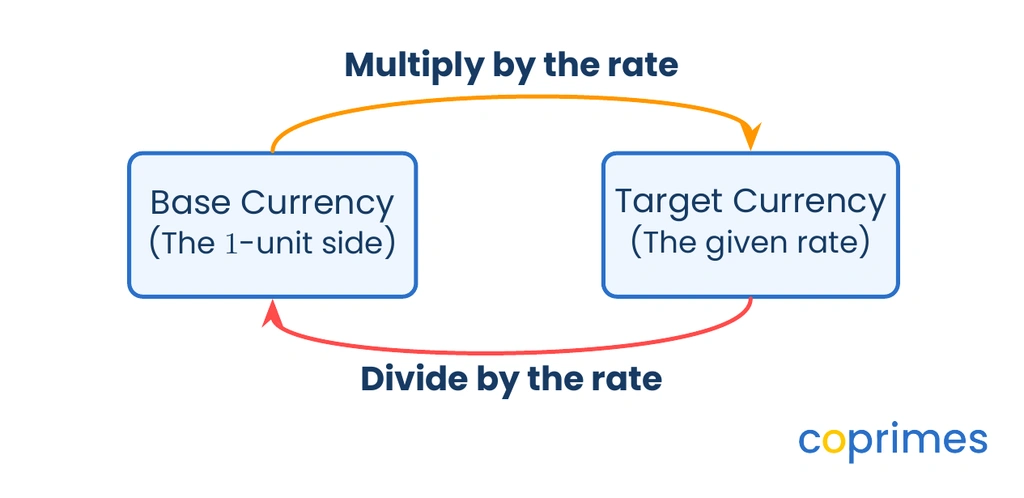
To convert from the base currency to the target currency, multiply your amount by the exchange rate. To convert backwards from the target currency to the base currency, divide your amount by the exchange rate.

Use a conversion table
A conversion table helps track related currency amounts. Since an exchange rate represents a proportion, multiplying or dividing one side by a scale factor means you must apply the same scale factor to the other side.
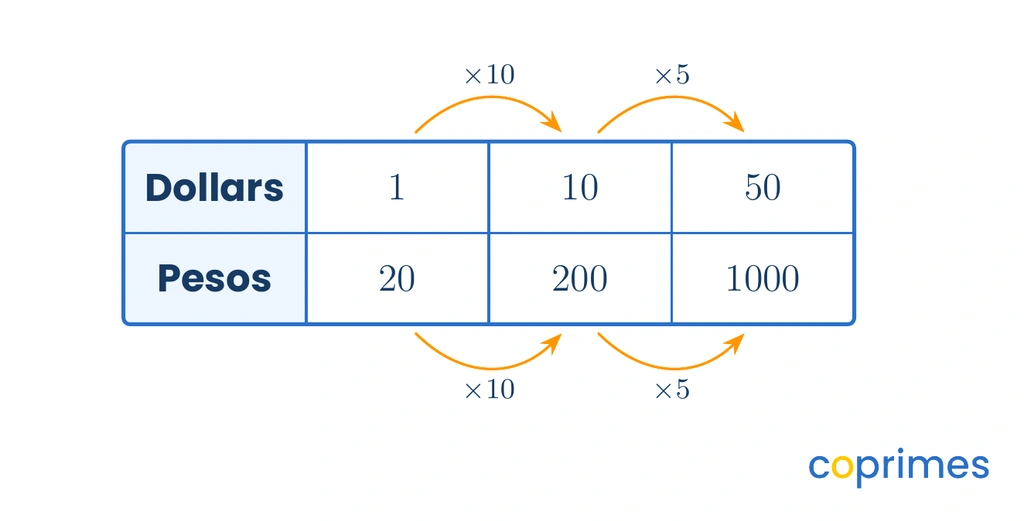
Organizing values in a table prevents calculation errors because it clearly separates the base currency from the target currency, making the required multiplication or division pattern visible.
Check a converted amount
Always check your final converted amount using dimensional analysis or a reverse conversion to ensure the units cancel correctly.
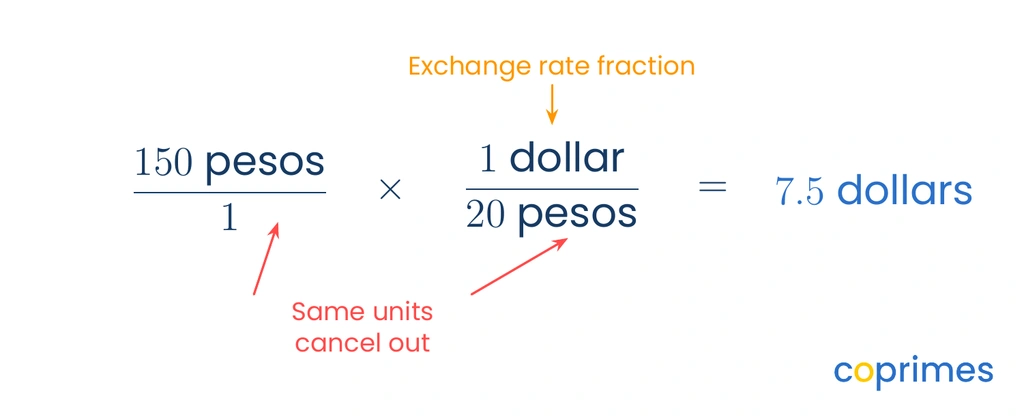
If you converted into dollars at an exchange rate of , you divide by because you are moving toward the one-unit side. To check this conversion, reverse the operation and multiply your answer by .
Worked examples
The following worked examples use ratio problem solving to convert and compare different currencies using exchange rates.
Example 1: Converting from the base currency
Question: An exchange rate is given as . How many yen are equal to ?
Method:
- Identify the base currency, which is the one-unit side. In this relationship, the euro is the base currency.
- Since you are converting from the base currency (euros), multiply the amount by the exchange rate.
- Calculate the new value: .
Answer: .
Check: Reconstruct the original amount using division.
Example 2: Converting to the base currency
Question: The exchange rate between pounds and dollars is . Convert into pounds.
Method:
- Identify the base currency, which is the pound.
- Since you are converting to the base currency, divide the dollar amount by the exchange rate.
- Calculate the new value: .
Answer: .
Check: Reconstruct the original amount using multiplication.
Example 3: Comparing costs using exchange rates
Question: A camera costs in Country A. The exact same camera costs in Country B. If the exchange rate is , which country sells the camera for less?
Method:
- Choose one currency to use as the common comparison scale. Let us convert everything into credits.
- Convert the cost in Country A to credits by multiplying the dollar amount by the exchange rate.
- Calculate .
- Compare the converted price from Country A () to the local price in Country B ().
Answer: The camera costs less in Country B.
Check: Convert the cost in Country B into dollars to verify.
Since is less than the charged in Country A, the conclusion is confirmed.
A learning plan shaped by your child, not the class
State-aligned Math plus our own Logic and English curriculum. An adaptive baseline test finds the gaps and fills them.
Common mistakes
One common mistake is assuming that a larger numerical value means the money is inherently worth more. Even if the number grows after conversion, the total purchasing power is equivalent unless additional fees apply. For instance, represents the exact same absolute value as when the exchange rate is .
Another frequent error is confusing when to multiply and when to divide. Always look for the currency that represents the unit. Moving away from the means you multiply, and returning to the means you divide.
Frequently asked questions
What is a currency pair?
When comparing the value of one currency against another, the two currencies combined form a currency pair. This determines the exchange rate you use.
Why do exchange rates change?
Market demand, a country's economic stability, and international trade constantly shift the exact value of currencies, which causes exchange rates to rise and fall throughout the day.
Do exchange services use the exact market rate?
Services that exchange money for travelers usually charge slightly more than the official market exchange rate in order to make a profit.
How does this differ from bank interest?
While banking concepts like simple interest depend on time and interest percentages applied over periods, exchange rates strictly depend on the current foreign exchange market value at the moment you convert your money.
Practice questions
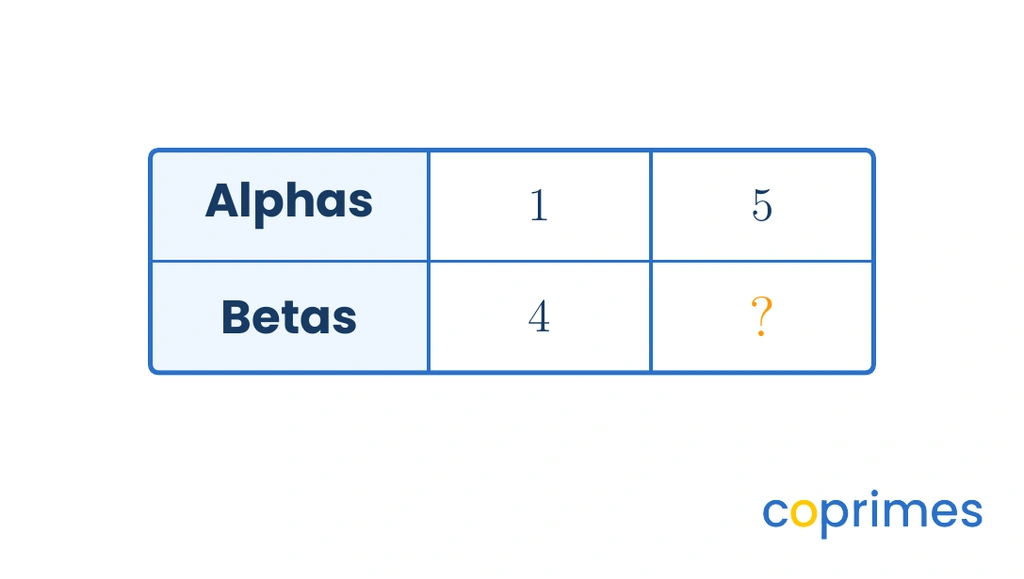
The table shows the proportional exchange rate between alphas and betas. How many betas are equal to ?
An exchange rate is . What is the value of when converted into dollars?
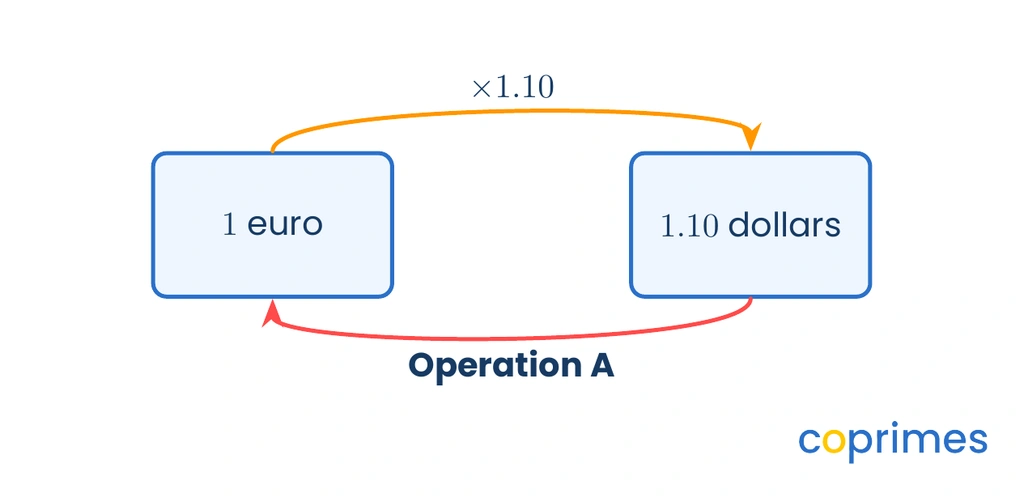
The flowchart outlines how to convert between euros and dollars. Which mathematical step correctly replaces Operation A to convert dollars back into euros?
If the current exchange rate is , which statement is mathematically true?
is worth more than .
is worth the exact same as .
is worth exactly .
The dollar is inherently worth more because is larger than .
is worth exactly .
A laptop costs in the United States and in another country. If the exchange rate is , what is the price difference when the comparison is made in dollars?
The laptop costs less in the United States.
The laptop costs less in the United States.
The laptop costs more in the United States.
The laptop costs more in the United States.
The laptop costs less in the United States.