
Verifying Proportions: Definition, Method, and Examples
To verify proportions means to mathematically check whether two ratios are equal. You can verify a proportion by simplifying both ratios to their lowest terms, comparing their decimal values, or using cross multiplication to ensure the products of the means and extremes are equal.
What does verifying a proportion mean?
A proportion is an equation stating that two ratios represent the exact same relationship.
To check if ratios are proportional, you must test whether this equation is mathematically true. If the two ratios are equivalent, the proportion is true. If they are not equivalent, the statement is false.
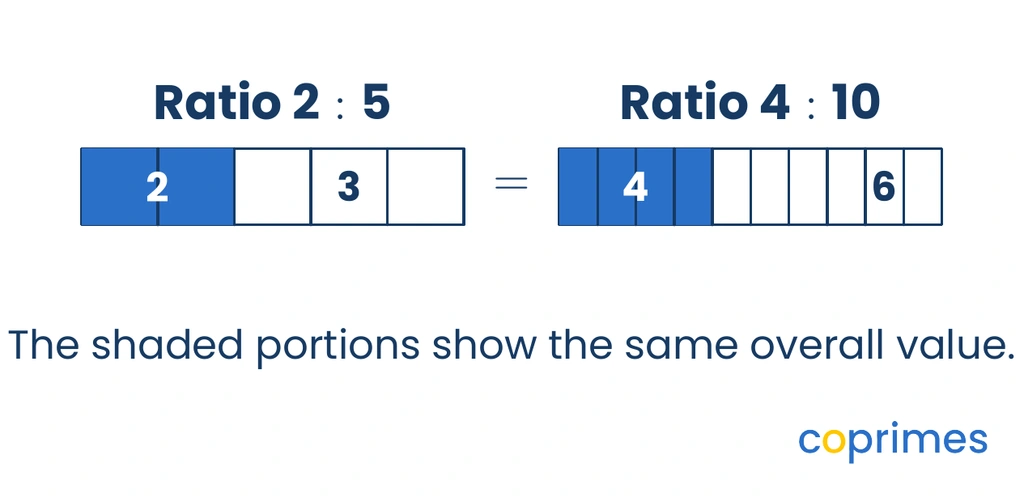
Checking a proportion is different from finding a missing value. When you verify a proportion, all four numbers are already given to you, and your task is to confirm if the equal sign between them is justified.
Check with equivalent ratios
One straightforward method to verify a proportion is to reduce both ratios to their simplest form.
If you are simplifying ratios and both sides reduce to the exact same numbers, you have confirmed that they are equivalent ratios. This means the proportion is true.
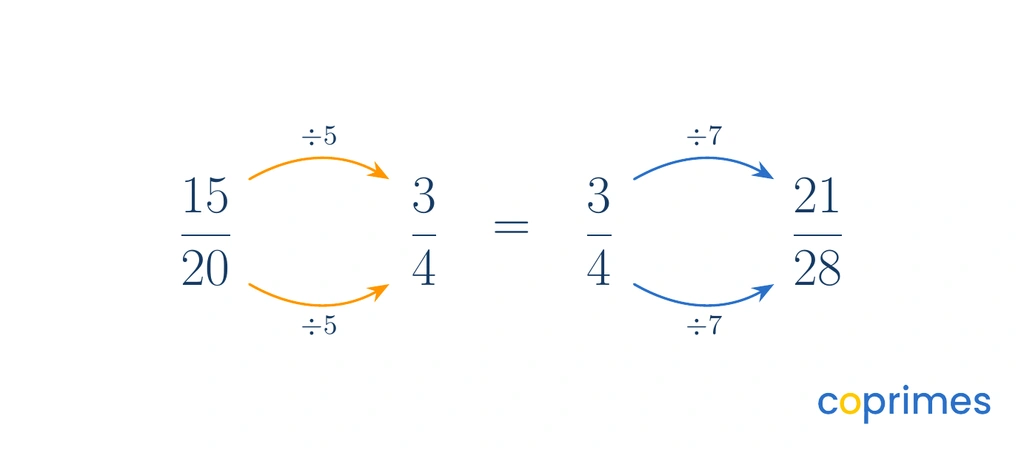
For example, to verify if , divide the numerator and denominator of the first ratio by their greatest common factor, . This gives . Then divide the second ratio by its greatest common factor, . This also gives . Because both simplify to the same value, the proportion is true.
Use means and extremes
When you write a proportion using colons, such as , the four values have specific names based on their positions.
The first and last numbers are called the extremes because they sit on the outside of the equation. The second and third numbers are called the means because they sit in the middle.
Rule: In a true proportion, the product of the means always equals the product of the extremes.
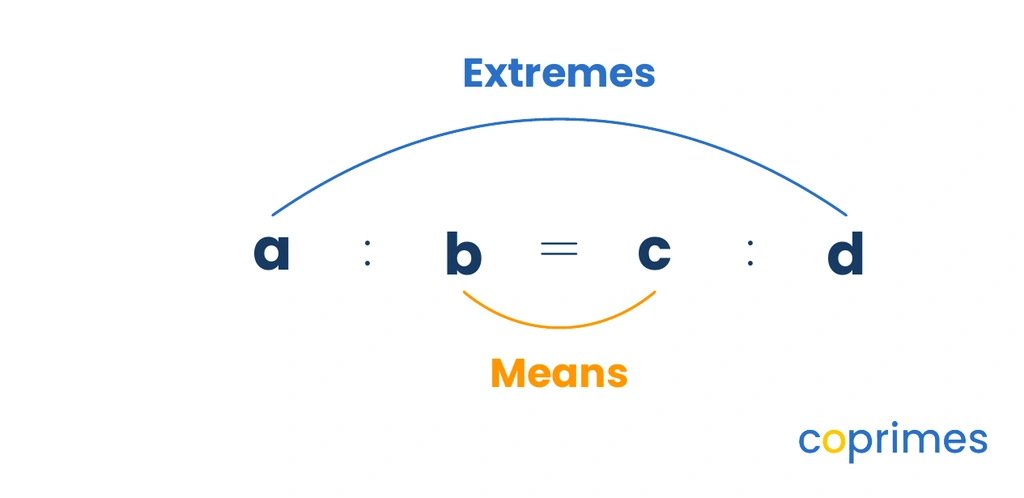
To test a proportion, multiply the two inner numbers together, then multiply the two outer numbers together. If the two products are identical, the proportion is verified.

Use cross multiplication
Cross multiplication is the exact same mathematical test as means and extremes, but it is applied when a proportion is written in fraction format.
To verify a proportion written as , you multiply the numerator of one fraction by the denominator of the other fraction to find the cross products.
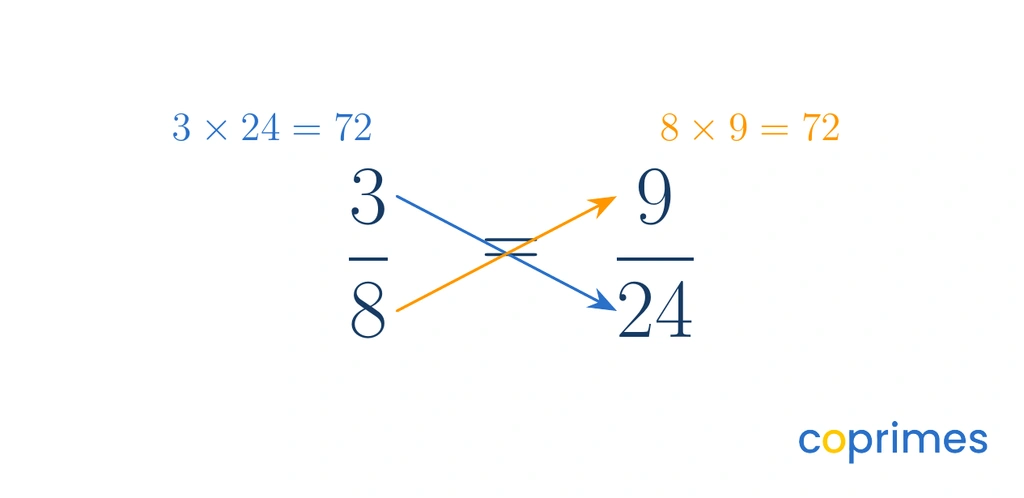
If the cross product equals the cross product , then the statement is correct and the ratios are proportional. This is often the fastest method when the numbers are too large to simplify quickly in your head.
Decide whether a relationship is proportional
You can use these testing methods to decide if real-world measurements represent a proportional relationship.
For example, if a store sells notebooks for dollars, and notebooks for dollars, you can test if the pricing is fair and proportional. Set up the two situations as ratios: and .
Multiply the means and extremes to check the equation: , and . Because both products equal , the relationship is proportional, and the store charges a consistent rate per notebook.
Worked examples
Example 1: Verifying a true proportion
Question: Verify whether the proportion is true using cross multiplication.
Method:
- Identify the two cross products. The first is and the second is .
- Calculate the first product: .
- Calculate the second product: .
- Compare the results.
Answer: Because , the proportion is true.
Check: Simplify both fractions to check your work. divides by to become . divides by to become . Both methods confirm the proportion is valid.
Example 2: Identifying a false proportion
Question: Determine if the ratios and form a proportion.
Method:
- Set up the equation using means and extremes: .
- Identify the extremes (the outside numbers): and .
- Identify the means (the inside numbers): and .
- Multiply the extremes: .
- Multiply the means: .
Answer: Because does not equal , the statement is false. The ratios do not form a proportion.
Check: Write them as fractions and simplify. reduces to , but reduces to . They are not equal.
Example 3: Checking a ratio table
Question: A recipe scales up the ingredients. Does the table below show a proportional relationship between flour and sugar?
Flour (cups) | Sugar (cups) |
Method:
- Write the pairs from the table as two ratios: and .
- Set them equal to test the proportion: .
- Find the first cross product: .
- Find the second cross product: .
Answer: Both cross products are , so the relationship between flour and sugar is proportional.
A learning plan shaped by your child, not the class
State-aligned Math plus our own Logic and English curriculum. An adaptive baseline test finds the gaps and fills them.
Common mistakes
A frequent error is multiplying straight across the numerators and denominators instead of crossing them. When verifying a proportion like , remember to multiply diagonally ( and ). Multiplying does not check the proportion.
Another mistake is confusing the process of verifying with solving proportions. Verifying means all four numbers are present and you are testing if the equation is true. Solving means one number is missing, usually represented by a variable like , and you must calculate its value to make the proportion true.
Frequently asked questions
Can I verify a proportion by turning the fractions into decimals?
Yes. You can divide the numerator by the denominator for each ratio. For example, to check , calculate and . Because the decimal values match exactly, the proportion is true.
Does it matter which cross product I write on the left side of the equals sign?
No. Because equality works in both directions, is exactly the same as . As long as you pair the correct numerator with the correct denominator across the diagonal, the order does not matter.
Practice questions
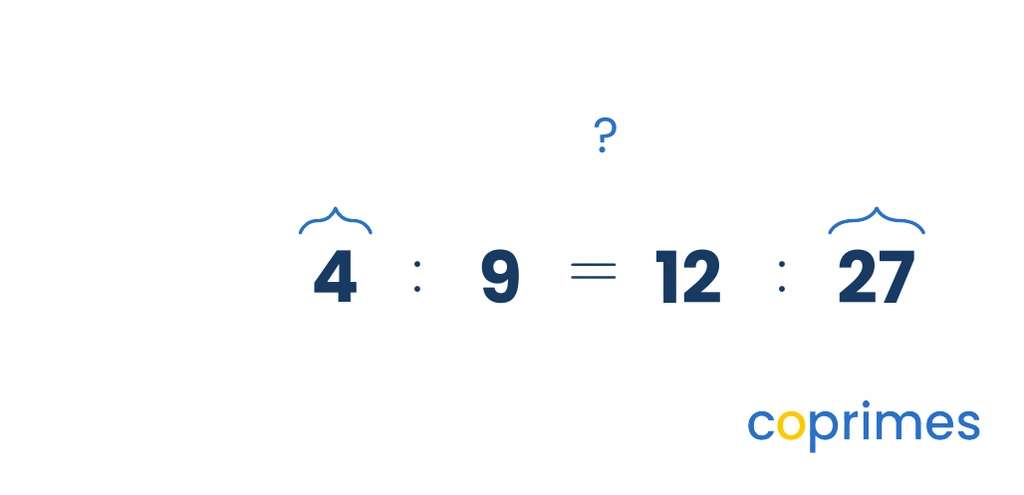
Based on their positions in the proportion, what is the mathematical name for the numbers and ?
Extremes
Means
Cross products
Numerators
Extremes
Which of the following equations represents a true proportion?
A student checks the equation by calculating and . What method are they using?
Simplifying the fractions to their lowest common denominator.
Finding the product of the means and extremes.
Solving for an unknown variable.
Converting the ratios into decimal percentages.
Finding the product of the means and extremes.
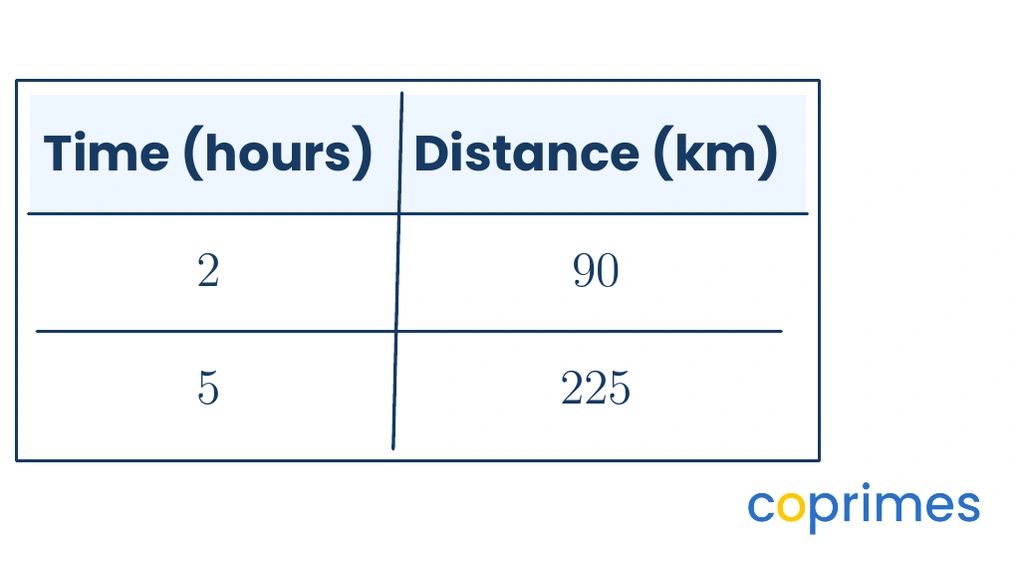
How can you verify that the relationship shown in the table is proportional?
By adding to the hours and to the distance.
By multiplying and seeing if it equals .
By subtracting from and from .
By checking if equals .
By checking if equals .
A builder claims that mixing bags of cement with liters of water produces the exact same concrete strength as mixing bags of cement with liters of water. Which statement correctly verifies this claim?
The claim is true because and .
The claim is true because both ratios can be simplified to .
The claim is false because but .
The claim is false because and .
The claim is false because but .